
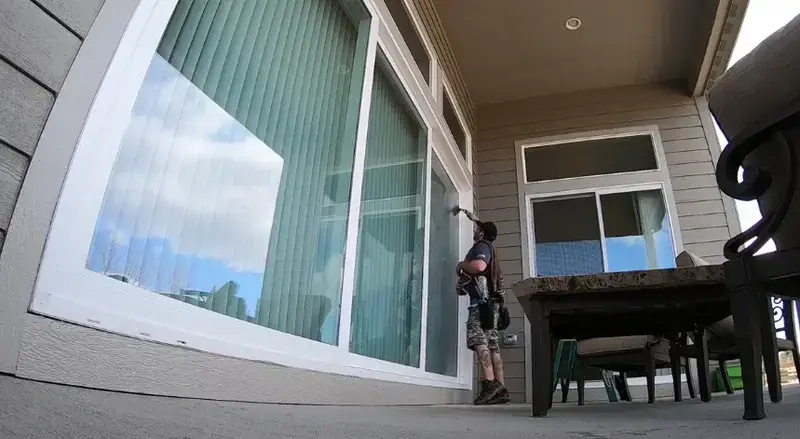
Does Rain Make Windows Dirty?
Rain can leave windows looking dirty, spotted, or streaked, but the rain itself is often only part of the explanation.
What was already on the glass matters. So does what the water touched before reaching the window, whether it carried material from nearby surfaces, and what remained after the water dried.
A useful way to think about it is: Rain makes windows wet. Whether they become dirty depends on what the water contacts, carries, and leaves behind.
This is why one window can look clear after a storm while another window on the same San Clemente home shows spots or streaks. The most useful clue usually appears after the glass dries. Rain is an event. A spot, streak, haze, or deposit is a condition. What remains after the rain tells you more than the fact that it rained.
Why Do Windows Look Dirty After Rain?
Windows can look dirtier after rain for several reasons.
Rain can interact with dirt or residue already on the glass. Water can run across frames, trim, ledges, or other exterior surfaces before reaching a pane. Lower windows may receive splashback from nearby surfaces. Rain can also bring some atmospheric material into contact with exposed surfaces.
Once the water dries, material left behind can become easier to see.
The basic relationship is:
The exact combination is different from one window to another.
Can Rain Move Dirt That Was Already on the Glass?
Yes.
A window may already have dust, pollen, ordinary exterior dirt, or another surface residue before a storm begins.
When rain reaches that pane, the water can move some of that material across the surface. After drying, the contamination may appear as streaks, spots, or uneven areas.
The rain did not necessarily create the original contamination. It changed how that contamination was distributed or how visible it became.
That is one reason a window can seem dirtier after a storm even when much of the material was already present.
Is Rainwater Actually Dirty?
Rainwater is not the same thing as laboratory purified water or the purified water used in some professional window cleaning methods.
The U.S. Geological Survey explains that precipitation can contain dissolved and suspended material from the atmosphere. That can include dust and other airborne particles.
This does not mean every raindrop falling over San Clemente is heavily contaminated.
It means the statement that rain is simply pure or distilled water is too broad.
For a homeowner, the more useful question is not whether rainwater is perfectly pure. It is:
What happened to the water before it dried on the window?
Can Rain Pick Up Dirt From Frames, Ledges, and Other Surfaces?
Yes.
Rain does not always fall directly from the sky onto the center of a clean pane.
Water may first move across or around:
- window frames
- exterior trim
- ledges
- sills
- nearby walls
- other exterior surfaces
As water moves across a surface, it can pick up loose material and carry some of it elsewhere.
The U.S. Environmental Protection Agency documents the broader principle that stormwater runoff can pick up material as it travels across surfaces. That research is about environmental runoff rather than window glass, but the basic transport principle helps explain why the path water takes around a property matters.
Falling rain and runoff are not the same exposure.
A pane receiving mostly direct rainfall may look different afterward from a pane receiving water that traveled across a dirty ledge or surrounding surface first.
Can Splashback Make Lower Windows Dirty After Rain?
It can.
Lower windows can sometimes receive water that has already contacted the ground, landscaping, a patio, wall, or another nearby surface.
That water can splash material toward the glass.
This does not happen equally at every property. The distance from the ground, surrounding surfaces, landscaping, overhangs, and direction of the rain can all change the exposure.
If lower panes look noticeably dirtier after a storm while protected upper glass looks different, splashback or nearby surfaces may be worth checking.
Does Rain Clean Dirty Windows?
Rain may rinse away some loose material, but getting wet is not the same as being professionally cleaned.
Actual window cleaning is a controlled process. The glass is assessed, appropriate tools and cleaning methods are used, attached contamination is addressed, and the finished pane can be checked afterward.
Andersen’s maintenance guidance, for example, treats dust, dirt, film, soot, salt spray, and heavier grime as conditions to be addressed through actual glass cleaning.
That illustrates an important distinction:
Getting rinsed by rain and being intentionally cleaned are not the same process.
Rain also does not inspect the finished glass, identify mineral deposits, distinguish surface haze from another glass condition, or address screens and tracks as part of an agreed cleaning scope.
Why Can Clean Windows Still Look Spotted After Rain?
Even a recently cleaned window is still exposed to the property around it.
Rain can reach the pane directly, but water may also arrive through runoff or splashback. Outdoor material can reach the glass during changing weather as well.
A professionally cleaned pane has less existing surface contamination available to be moved around by water. That does not isolate the pane from everything that happens afterward.
So if a recently cleaned window looks spotted after rain, look at the pattern and location of what remains.
Ask:
- Is the mark across the whole pane or near one edge?
- Is it concentrated below a frame or ledge?
- Is it mostly on lower glass?
- Is the same pattern visible near a sprinkler?
- Does it disappear when the pane is properly cleaned?
- Does the mark remain even after routine contamination is removed?
Those clues are more useful than assuming the rain itself caused every mark.
Will Rain Ruin Freshly Cleaned Windows?
Not necessarily.
A clean window getting wet is not the same thing as a dirty window becoming clean, and it is not proof that the cleaning was ruined.
What happens afterward depends on what reaches the glass.
Direct rainfall on relatively clean glass can produce a different result from runoff carrying material from another surface.
Wind, surrounding surfaces, landscaping, splashback, and existing property conditions can also influence the result.
If a mark appears after rain, inspect what remains rather than judging the glass while it is still wet.
Are Spots After Rain the Same as Hard Water Spots?
No.
This distinction is especially important around San Clemente homes with irrigation and landscaping.
Hard water spotting involves mineral containing water reaching the glass and leaving mineral material behind as the water evaporates.
Seeing white spots after a storm does not identify their source.
A better diagnostic sequence is:
Where is the spotting? → What water sources reach that pane? → What remains after cleaning? → Is there evidence of a mineral deposit?
That is much more useful than:
It rained → therefore the spots are hard water.
Could Those Spots Actually Be From Sprinklers?
Yes.
If a window is repeatedly reached by sprinkler overspray, irrigation water may be a more relevant source than rainfall.
Look at the pattern.
Does the spotting occur mostly on glass facing landscaping?
Does one section of the pane receive repeated sprinkler exposure?
Do nearby windows outside the irrigation path look different?
Those relationships can help identify the likely source.
“I noticed the spots after rain” describes timing. It does not identify the deposit.
If mineral spotting is suspected, see our Hard Water Stain Removal in San Clemente and Hard Water Stains vs Glass Etching resources.
Can Rain Cause Permanent Glass Damage?
Ordinary rainfall should not automatically be blamed for permanent glass damage.
A mark noticed after rain may be removable contamination, an existing mineral deposit, a changed glass surface, or another condition that became more visible after the pane got wet.
This distinction matters because more aggressive cleaning is not the correct response to every mark.
If appropriate cleaning removes the contamination, it was a cleaning problem.
If the appearance remains, the next step is identifying the remaining condition.
The weather event and the glass condition are two different questions.
Why Can the First Rain After a Dry Period Look Different?
After a long dry period, outdoor surfaces may have had more time to accumulate loose material before rain arrives.
California water quality research describes a broader first flush effect in which accumulated material can be mobilized during early storm runoff after dry periods.
That research concerns stormwater, not residential window glass.
So it should not be turned into a rule that the first rain always makes every San Clemente window dirtiest.
The useful property level takeaway is simpler:
After a dry period, check what may have accumulated on the glass and surrounding exterior surfaces before assuming the rainfall itself created the dirt.
This can be particularly relevant when runoff crosses dusty ledges, trim, walls, or other exposed surfaces before reaching the pane.
Does Wind Driven Rain Make a Difference?
It can change which parts of a property receive water.
A protected pane under an overhang may receive little direct rain while an exposed pane on another side of the home gets much wetter.
Wind can also move loose outdoor material during a storm.
For this article, the important point is exposure:
The same storm does not reach every window in the same way.
Questions about whether wind or other weather conditions make exterior work practical belong more fully in our Weather & Window Cleaning in San Clemente guide.
Does Coastal Exposure Change What Happens After Rain in San Clemente?
It can change the background conditions around the window, but coastal location does not diagnose the mark left on the glass.
Homes around North Beach, the Pier Bowl, and the area near San Clemente Pier have a more immediate coastal setting than many inland properties.
That context can matter because exterior surfaces may experience different combinations of airborne material, moisture, wind, and exposure.
But we should not turn:
A window in Talega or Forster Ranch may have a different combination of irrigation, landscaping, surrounding surfaces, and wind exposure.
Rancho San Clemente and Marblehead can introduce differences in elevation, orientation, and property layout.
The weather event may be the same. The exposure of each window is not.
For the broader maintenance question, see our Coastal Window Care in San Clemente guide.
Why Do Some Windows Stay Clear While Others Look Dirty After the Same Rain?
Because windows on the same property can have different exposure.
One pane may sit under an overhang.
Another may face open sky.
One may be beside landscaping.
Another may be above a clean patio.
One may receive sprinkler overspray.
Another may never be reached by irrigation.
A screen can also change how water and loose material reach the glass behind it.
This is why neighborhood, forecast, or rainfall amount alone cannot explain every pane.
A better comparison is:
That is also why looking at several windows around the property can be more useful than diagnosing one mark in isolation.
Why Are My Windows Still Dirty After the Rain Stops?
First, let the glass dry enough to see what actually remains.
Then look at the appearance.
| What Remains After Rain | What It May Indicate |
|---|---|
| Loose Dirt or Uneven Film | This may point toward ordinary exterior contamination that the rain did not fully remove. |
| Streaks Below a Frame or Ledge | Check whether water may have run across another surface before reaching the glass. |
| Dirt Concentrated on Lower Glass | Splashback or surrounding surfaces may be involved. |
| White Spots | Investigate the water source before labeling them hard water. |
| Persistent Haze | The pane may need further diagnosis. Surface contamination, mineral deposits, glass condition, or moisture between panes can create different types of cloudy appearance. |
| Fog Between Panes | Exterior cleaning cannot reach moisture sealed inside an insulated glass unit. |
The key is to diagnose what remains rather than continuing to diagnose the storm.
What Should You Check After Rain?
A simple post rain check can tell you a lot.
Look at the window after the temporary surface moisture has cleared enough to evaluate the glass.
Check:
Where is the mark?
Whole pane, one edge, lower glass, or one isolated area?
What is above or beside the pane?
Frame, ledge, wall, roofline, landscaping, or irrigation?
Which direction does the window face?
Is it exposed or protected?
Do nearby panes show the same condition?
Different results can reveal different exposure.
Is there a sprinkler or irrigation source nearby?
Repeated water exposure may explain recurring mineral spots.
Does routine cleaning remove the mark?
If not, another glass condition may need to be identified.
This turns a vague question like:
Should You Clean Windows Before or After Rain?
There is no universal rule that every window should be cleaned only before or only after rain.
If the windows are dirty now, a future rain forecast does not remove the existing contamination.
If a storm is expected to create runoff, difficult exterior access, or other site issues, timing may affect the practical decision.
But that is primarily a scheduling question rather than a diagnosis of why glass looks dirty.
For the full timing discussion, see Should You Clean Windows Before or After Rain?
How Long Should You Wait After Rain to Clean Windows?
There is no universal number of hours or dry days.
The useful question is whether current conditions allow the requested work to be completed appropriately.
Wet access areas, active rain, runoff, and other property conditions may matter.
For a detailed discussion of weather and cleaning conditions, see our Weather & Window Cleaning in San Clemente guide.
Can Professional Window Cleaners Work in the Rain?
Sometimes.
Light rain and a major storm create very different working conditions. Exterior access, runoff, wind, visibility, and the requested scope can all affect whether work can reasonably proceed.
This is a weather and access decision rather than a question of whether rain itself makes glass dirty.
Our Weather & Window Cleaning in San Clemente resource covers that decision in more detail.
How We Evaluate Rain Related Window Concerns in San Clemente
When a window looks dirty after rain, we do not start by assuming the weather caused the entire condition.
We look at what is actually visible on the glass and the property conditions around it.
That can include the location of the mark, surrounding surfaces, exterior exposure, irrigation, screens, access, and whether the condition appears to be routine contamination or something that needs further diagnosis.
The cleaning approach follows the condition of the glass and the agreed scope.
If screens are included in the scope, they are removed, cleaned, allowed to dry or drain as appropriate, and reinstalled.
Property protection is used as required by the site.
We also complete a final walkthrough with the customer so concerns within the agreed scope can be addressed before we leave.
The principle is simple:
Rain is an event. A spot, streak, haze, or deposit is a condition. Identify the condition before deciding what the glass needs.
Does Rain Make Windows Dirty? FAQs
Does Rain Make Windows Dirty?
It can contribute to dirty looking glass, but the result also depends on existing contamination, runoff, splashback, surrounding surfaces, and what remains after drying.
Does Rainwater Leave Spots on Windows?
It can. The appearance of a spot alone does not identify its source, so check the exposure and water path before assuming it is a mineral deposit.
Does Rain Clean Dirty Windows?
Rain may rinse away some loose material, but rainfall is not the same as controlled window cleaning.
Will Rain Ruin Freshly Cleaned Windows?
Not necessarily. A clean pane can get wet without becoming dirty, although runoff, splashback, or new outdoor material can still reach the glass.
Why Do Windows Look Worse After Rain?
Water may redistribute existing dirt or carry material from surrounding surfaces. The remaining streaks, spots, or haze become easier to evaluate once the pane dries.
Are Rain Spots the Same as Hard Water Spots?
No. Hard water is a mineral deposit diagnosis. A spot noticed after rain should be evaluated by its pattern, water source, and what remains on the glass.
Should I Clean Windows Before It Rains?
You can. A rain forecast alone does not make cleaning pointless. Timing should depend on the current glass condition and practical weather conditions.
Should I Clean Windows After Rain?
Yes, if the glass is dirty and conditions are suitable. There is no requirement to wait simply because it recently rained.
How Long Should I Wait After Rain to Clean Windows?
There is no fixed waiting period. Active weather, runoff, exterior access, and site conditions are more useful than an arbitrary number of dry hours or days.
Windows Still Look Dirty After the Rain?
If your windows still have spots, streaks, haze, or visible dirt after the rain has passed, the next step is identifying what remains on the glass.
It may be routine surface contamination, runoff, sprinkler related mineral spotting, or another glass condition that needs a different approach.
Window Specialists San Clemente can evaluate the visible condition, surrounding exposure, and agreed cleaning scope before deciding how the glass should be handled.
Monday through Saturday, 8:00 AM to 6:00 PM.