
How to Remove Hard Water Spots From Windows
Hard water spots form when mineral containing water dries on glass and leaves deposits behind. Light, recent spots may respond to gentle cleaning with an appropriate glass safe method, while repeated or stubborn mineral buildup can require more specialized treatment.
Before using stronger products or abrasive tools, identify the glass type and condition, check compatibility, test a small area, and stop if the marks do not respond as expected. Some persistent marks may involve glass surface damage rather than removable deposits.
BEGIN GENTLYSTUBBORN SPOTS
ASSESS FIRSTUNKNOWN COATING
CHECK INSTRUCTIONSNO IMPROVEMENT
KNOW WHEN TO STOP
Start here:
- Light or recent spotting: Begin gently.
- Repeated or stubborn spotting: Assess the condition before escalating.
- Unknown coating or glass: Check manufacturer care instructions.
- Marks unaffected by appropriate treatment: Consider whether etching, scratches, or another glass condition may be involved.
What Do Hard Water Spots Look Like on Windows?
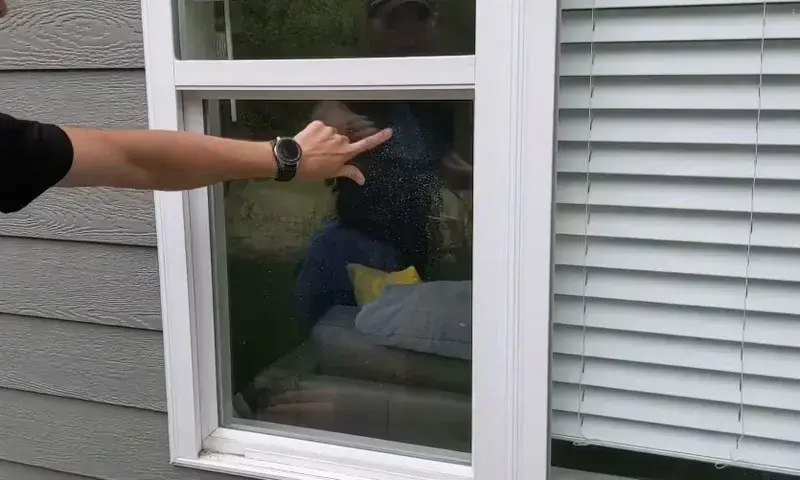
Hard water deposits often appear as white or cloudy marks where water droplets repeatedly dry on the glass.
You may notice:
- White spots
- Chalky looking marks
- Droplet shaped rings
- Speckled spotting
- Cloudy mineral film
- Repeated marks in areas hit by water
- Spots that remain after ordinary window cleaning
Appearance alone cannot always tell you how established the deposits are or whether the glass surface has been altered.
How Are Hard Water Spots Different From Ordinary Dirt?
| Ordinary Surface Dirt | Possible Hard Water Deposits |
|---|---|
| Dust, pollen, fingerprints and grime | White or mineral looking spots and film |
| Usually responds to routine cleaning | May remain after routine cleaning |
| Often appears as general contamination | May follow dried water patterns |
| Surface contamination | Deposited minerals on the glass surface |
If you are not sure whether the window is dirty, mineral stained, scratched, or cloudy for another reason, see Why Are My Windows Cloudy Even After Cleaning?
Why Does Water Leave Mineral Spots on Glass?
Water can contain dissolved minerals and other material that may not be visible while the water is wet.
When droplets reach a window and dry, the water evaporates but dissolved material can remain.
The basic process is:
The International Window Cleaning Association notes that hard water deposits can vary according to the type and concentration of dissolved minerals. Calcium and magnesium are commonly associated with hard water, while other dissolved material, including silicates, can make some deposits more difficult to remove.
Why Are Sprinkler Facing Windows Common Trouble Spots?
Sprinkler overspray can repeatedly wet the same section of exterior glass.
If those droplets dry there again and again, mineral deposits can build in a recognizable pattern. This can happen where windows, patio doors, or other glass sit close to lawns and landscaped areas.
In San Clemente, this is worth considering on properties with irrigation around windows. A sprinkler facing pane in Talega or Forster Ranch may experience a different water exposure pattern from protected glass on the same property.
The City of San Clemente publishes annual water quality information that includes hardness and dissolved mineral data. Water sources can also vary across the community, so one fixed hardness level should not be assumed for every property.
The practical point is simple:
Are the Hard Water Spots Light, Stubborn or Possibly Something Else?
Before choosing a removal method, look at the condition of the affected glass.
Light or Recent Deposits
Light deposits may involve relatively recent water spots, limited surface buildup, or faint droplet marks.
These are reasonable conditions for beginning with a mild approach, provided the method is suitable for the glass.
Established or Stubborn Deposits
Repeated water exposure can produce more persistent spotting or cloudy mineral film.
If ordinary window cleaning does not change the marks, the problem may require treatment beyond routine cleaning.
Possible Glass Damage
A mark that remains does not automatically prove the glass is damaged.
Persistent marks can involve stubborn mineral deposits, etching, scratches, coating issues, or another surface condition.
When the condition is uncertain, identify what you are treating before increasing the strength or aggressiveness of the method.
Can Regular Window Cleaning Remove Hard Water Spots?
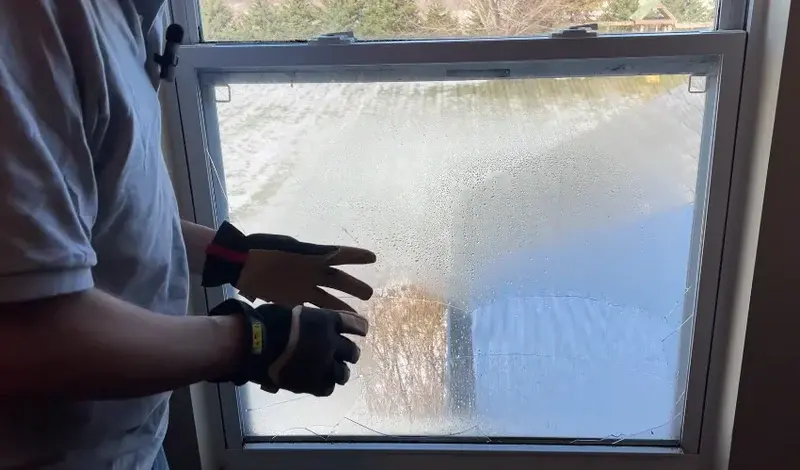
Sometimes, but routine window cleaning and hard water stain treatment are not the same job.
Routine cleaning is mainly intended to remove surface contamination such as:
- Dust
- Pollen
- Fingerprints
- Smudges
- Ordinary grime
- Light surface film
Very light mineral spotting may improve during normal cleaning.
Established mineral deposits can behave differently. They may remain after ordinary dirt has been removed and require a treatment selected for the deposit and glass condition.
The International Window Cleaning Association classifies hard water stains among the tenacious deposits encountered in nonroutine window cleaning and notes that improper removal methods can damage glass, coatings, and adjacent surfaces.
For professional treatment information, see Hard Water Stain Removal San Clemente.
How Do You Remove Light Hard Water Spots From Windows Safely?
For light deposits, the safest starting point is a controlled process rather than jumping immediately to the strongest cleaner available.
Step 1: Start With a Clean Glass Surface
Remove loose dust, dirt, grit, and ordinary surface contamination first.
This makes the remaining spotting easier to inspect and reduces the chance of rubbing loose abrasive debris across the glass.
Step 2: Check Whether the Glass Can Be Treated Normally
Before treating mineral spots, consider whether the window has:
- A coating
- Aftermarket film
- Tint
- Specialty glass
- A manufacturer applied surface treatment
- An unknown previous treatment
If you are uncertain, check the glass or window manufacturer's care instructions before applying a treatment.
Step 3: Start With a Mild Glass Safe Approach
For light spotting on a suitable surface, begin with a mild method appropriate for the glass rather than aggressive chemicals or abrasives.
The goal is to loosen or dissolve removable deposits without creating a new problem on the surface.
Step 4: Follow the Treatment Instructions
If you use a glass compatible product or method, follow its instructions for application, concentration, and contact time.
Do not assume that leaving a product on longer or making it stronger will improve the result.
Step 5: Work the Affected Area Gently
Treat the spotted area without unnecessary pressure.
If a mild method is working, there is no benefit in making the process more aggressive.
Step 6: Clean or Rinse the Surface and Inspect It
After treatment, inspect the glass in good light.
Ask:
- Did the spots improve?
- Did they disappear?
- Did the appearance remain unchanged?
- Are different marks now visible beneath the removed deposits?
This tells you more than repeatedly treating the same area without checking the result.
Step 7: Stop Before Escalating Blindly
If an appropriate mild treatment does not change the marks, stop and reassess.
You may be dealing with heavier mineral deposits, a different type of deposit, or a condition affecting the glass itself.
The removal framework is:
Can Vinegar Remove Hard Water Spots From Windows?
Vinegar may help with some light mineral deposits, but it is not a guaranteed solution for every hard water spot or every glass surface.
Its mild acidity can act on some mineral residues. However, hard water deposits are not all chemically identical.
IWCA technical guidance notes that dissolved silicates can create deposits that behave differently from common calcium and magnesium based residues. Some silicate deposits may not respond to vinegar or other common household cleaning agents.
That helps explain why vinegar can appear effective on one window and do very little on another.
When Might Vinegar Help?
Vinegar may be worth considering for light or relatively recent mineral deposits when the glass surface is suitable and the manufacturer's care instructions do not conflict with its use.
Why Doesn't Vinegar Always Work?
Possible reasons include:
- The deposits are established
- Mineral buildup has accumulated repeatedly
- The deposit contains material that does not respond well to a weak acid
- The mark is not actually a removable mineral deposit
- The glass surface has been altered
- A coating or other surface condition affects the appropriate treatment
If vinegar does not remove the marks, repeatedly applying more pressure or increasingly aggressive methods is not necessarily the right next step.
When Should You Be Careful Using Vinegar on Windows?
Do not assume vinegar is suitable for every window simply because it is a common household product.
Extra care is appropriate when the window has:
- Coated glass
- Aftermarket window film
- Tint
- Specialty surfaces
- Unknown surface treatments
- Nearby finishes or materials that may react differently
Manufacturer care instructions should take priority when available.
A product being suitable for one glass surface does not make it suitable for every window.
What Should You Not Use Blindly on Hard Water Spots?
A stubborn spot can tempt you to keep increasing the strength of the treatment. That can turn a mineral deposit problem into a surface damage problem.
Aggressive Abrasives
Abrasive materials can alter or scratch some surfaces.
National Glass Association guidance for routine architectural glass maintenance warns against abrasive cleaning solutions and materials.
Scrapers or Razors Without Understanding the Glass
Do not treat a razor or scraper as a universal hard water removal tool.
Glass type, coatings, surface condition, and contamination all matter. NGA guidance specifically warns against razor blades on coated glass surfaces.
Strong Chemicals Without Checking Compatibility
A stronger chemical is not automatically a better hard water remover.
Glass coatings, frames, seals, adjacent finishes, and the deposit itself may respond differently.
Random Cleaning Mixtures
Do not combine cleaning chemicals based on an online recipe unless their compatibility and safe use are known.
Excessive Scrubbing
If a deposit is not responding, more pressure may not solve the underlying problem.
For more detail, see What Not to Use to Clean Window Glass.
Does the Type of Glass or Coating Matter?
Yes.
Not every window presents the same cleaning surface.
You may be working with standard architectural glass, coated glass, film covered glass, tinted surfaces, specialty glass, or a manufacturer applied treatment.
The National Glass Association warns that architectural glass can be permanently damaged when improperly cleaned and recommends following appropriate cleaning procedures.
When Should You Check Manufacturer Instructions?
Check them whenever you know or suspect the glass has a special coating, tint, film, treatment, or unusual construction.
This is especially useful with newer windows where product information may still be available.
If the surface is unknown, that uncertainty itself is a reason to avoid aggressive treatment.
Why Should You Test a Small Area First?
A small test area gives you information before you treat a larger section of glass.
It can help determine:
- Whether the product appears compatible with the surface
- Whether the spots actually respond
- Whether residue is being left behind
- Whether the glass appearance changes unexpectedly
What Should You Look for During the Test?
Check whether the mineral spotting becomes lighter or disappears.
Also watch for unexpected haze, scratching, discoloration, coating changes, or no improvement at all.
If something unexpected happens, stop rather than automatically increasing the intensity of the treatment.
How Do You Know When DIY Hard Water Removal Is Not Working?
DIY treatment has reached a reasonable stopping point when the risk or uncertainty begins to increase faster than the improvement.
Warning signs include:
- Spots remain after an appropriate mild treatment
- Mineral film appears heavily established
- A large area of glass is affected
- Repeated sprinkler exposure has produced significant buildup
- The glass type or coating is uncertain
- The affected glass is difficult to reach safely
- More aggressive treatment appears necessary
- You are no longer sure whether the mark is a deposit or glass damage
How Do You Avoid Turning a Cleaning Problem Into Glass Damage?
Do not assume every failed attempt means you need a stronger product, more pressure, a sharper tool, or a harsher abrasive.
When a mild method stops producing useful improvement, reassess the condition before doing more.
For difficult upper level glass, see How Are Second Story and Hard to Reach Windows Cleaned?
How Do Professionals Treat Stubborn Hard Water Spots?
Professional treatment begins by determining what is on the glass and whether the surface is suitable for treatment.
A professional assessment may consider the severity of the deposits, likely water exposure, glass condition, coatings, and access. Ordinary dirt may first need to be separated from the mineral buildup so the remaining condition can be evaluated.
Where appropriate, a treatment can be tested before broader use. The method then depends on the actual deposit and glass condition.
After treatment, remaining marks may need to be reassessed for stubborn deposits, etching, scratches, or another glass condition.
Professional treatment should not begin with a promise that every hard water stain can be removed.
For service specific information, see Hard Water Stain Removal San Clemente.
What If the Hard Water Spots Are Actually Glass Etching?
A mineral deposit and glass surface damage are not the same thing.
Deposit = material on the glass
Etching or damage = the glass surface itself has been altered
The problem is that both can sometimes look cloudy, spotted, hazy, or persistent.
Why Can Hard Water Deposits and Etching Look Similar?
Both conditions can remain visible after ordinary window cleaning.
Appearance alone may not provide a conclusive diagnosis, which is why persistent marks should be reassessed rather than treated more aggressively by default.
Can Cleaning Remove Glass Etching?
Cleaning can remove appropriate material sitting on the glass. It cannot simply clean away a physical alteration of the glass surface.
How Can You Prevent Hard Water Spots From Coming Back?
Removing the deposits solves only part of the problem if mineral containing water continues to reach the same glass.
Reduce Sprinkler Overspray
Where practical, adjust irrigation so sprinklers are not repeatedly spraying windows, patio doors, or nearby glass.
Address Repeated Water Exposure
If one window keeps developing the same spotting pattern, look for the source instead of repeatedly treating only the deposits.
Watch Sprinkler Facing Glass
Early spotting is easier to recognize before repeated wetting and drying creates heavier buildup.
Maintain Exterior Glass Based on Exposure
A protected pane and a sprinkler facing pane on the same San Clemente property can experience very different conditions.
For maintenance timing, see How Often Should You Clean Your Windows in San Clemente?
For the full prevention topic, see How to Prevent Hard Water Spots on Windows.
What Is the Best Next Step for Your Hard Water Spots?
Not Sure Whether the Spots Are Deposits or Glass Damage?
Window Specialists San Clemente can assess the visible condition, the likely water exposure, and whether professional hard water stain treatment is appropriate for your glass.
Call (949) 883-0300 to discuss the affected windows and receive a property-based quote.
Window Specialists San Clemente
931 Calle Negocio, Suite A
San Clemente, CA 92673
(949) 883-0300
Monday through Saturday
8:00 AM to 6:00 PM