
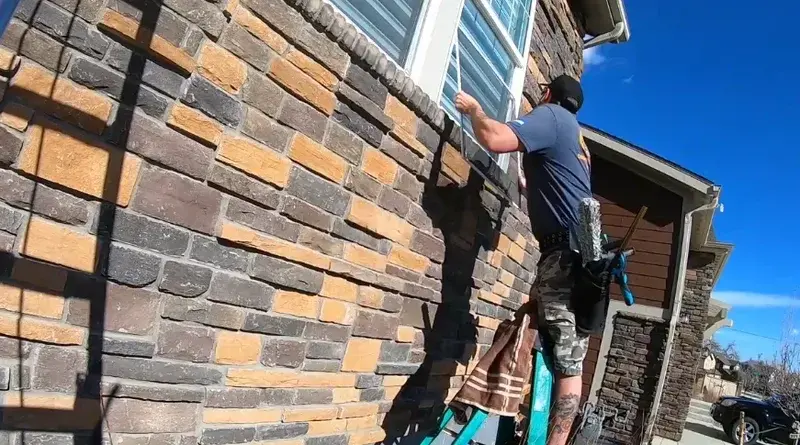
Should Windows Be Cleaned Before or After Exterior House Washing?
Final exterior window cleaning usually makes more sense after exterior house washing.
Washing siding, stucco, trim, soffits, fascia, or other exterior surfaces can put water, loosened dirt, cleaning solution, or runoff onto nearby glass. If the windows receive their final cleaning first, some of that work may need to be repeated.
That does not mean the windows should be ignored before the house wash. A pre wash inspection can identify existing hard water deposits, scratches, damaged screens, cloudy glass, or other conditions before exterior work begins.
The useful sequence is usually:
House washing cleans the building exterior. Window cleaning finishes the glass. They are related services, but they are not the same job.
Is It Better to Clean Windows Before or After Washing the House?
For most projects, complete the final exterior window cleaning after the house washing.
| Stage | Window cleaning role |
|---|---|
| Before house washing | Inspect existing conditions and identify special concerns |
| During house washing | Protect or handle windows according to the product and washing method |
| After house washing | Check what reached or remains on the glass |
| Final step | Complete the appropriate window cleaning |
The reason is simple. If another exterior process can put material back onto clean glass, it makes sense to finish that process first.
Inspection belongs before the wash. Finish level window cleaning usually belongs after it.
Why Does Window Cleaning Usually Come After Exterior House Washing?
Exterior house washing may involve water, cleaning solution, runoff, loosened dirt, dust, or material released from nearby exterior surfaces.
Some of that may reach the windows.
That does not mean every house wash makes every window dirty. It means the glass should not be treated as finished while work that can affect it is still underway.
Compare the two sequences:
versus:
The second sequence usually makes more sense.
If another exterior process can put material back onto the glass, complete that process before treating the glass as finished.
For a San Clemente home, the glass may already have coastal residue, sprinkler spots, or ordinary exterior dirt before house washing begins. That is another reason inspection should come before diagnosis.
Does Exterior House Washing Clean the Windows Too?
Not necessarily.
Water running across a window during a house wash may rinse away some loose material. That is different from deliberately cleaning the glass.
The Fenestration and Glazing Industry Alliance, or FGIA, recommends cleaning glass with an appropriate mild cleaning solution, rinsing it completely with clear water, and drying it with a soft cloth or squeegee.
Window manufacturers give similar product specific cleaning instructions.
The important distinction is:
rinsed glass ≠ finished window cleaning
A house wash may leave a window looking better than it did before. It may also leave droplets, existing deposits, or residue that still needs attention.
Water running over a window during a house wash does not automatically mean the window received a complete window cleaning service.
What Is the Difference Between House Washing and Window Cleaning?
The two services work around many of the same areas, but they have different primary targets.
Exterior House Washing
House washing primarily targets exterior building surfaces such as:
- Siding
- Stucco
- Exterior walls
- Soffits
- Fascia
- Trim where included
Window Cleaning
Window cleaning follows the window and the condition being addressed.
Depending on the agreed scope, that can include:
- Exterior glass
- Interior glass
- Screens
- Frames
- Sills
- Tracks
Specific deposits that are appropriate for cleaning
Screens, tracks, frames, and specialty deposit removal should not be assumed to be included unless they are part of the agreed window cleaning scope.
House washing targets the building exterior. Window cleaning follows the window and its condition.
Is House Washing the Same as Pressure Washing?
No.
“House washing” describes the exterior cleaning job.
“Pressure washing” describes one way water may be delivered during exterior cleaning.
House washing methods can differ in pressure, cleaning solution, application equipment, rinsing method, and the surface being cleaned.
Some exterior surfaces are cleaned using lower pressure methods often called soft washing.
This distinction matters around windows because industry and manufacturer guidance does not treat high pressure water as a normal window cleaning method.
FGIA says not to use a pressure washer or high pressure sprayer to wash or rinse windows because seals, gaskets, and frame components can be affected.
Simonton also says not to clean its windows and doors with a high pressure washer and warns against using high pressure on glass.
House washing describes the job. Pressure washing describes a method. They should not automatically be treated as the same thing.
Is Soft Washing the Same as Window Cleaning?
No.
Lower pressure changes one part of the exterior washing process. It does not turn house washing into dedicated glass cleaning.
Soft washing may still involve cleaning solution, rinse water, runoff, and different application methods.
The glass may therefore need to be evaluated after the exterior washing stage is complete.
Lower pressure may change the house washing method, but it does not turn house washing into dedicated glass cleaning.
Do Windows Need Any Cleaning Before the House Is Washed?
Sometimes, but a full finish level cleaning is usually unnecessary solely because house washing is about to happen.
The more useful first step may be an inspection.
Look for:
- Existing hard water spots
- Scratches
- Cracked or chipped glass
- Damaged screens
- Existing haze
- Paint or adhesive
- Unusual glass or coating conditions
If dirt prevents a particular condition from being evaluated, limited cleaning may be useful.
But there is little benefit in bringing the entire exterior glass to its finished condition immediately before another exterior service that may put water or residue back onto it.
Before house washing, the most valuable window step may be inspection rather than cleaning.
Why Inspect Windows Before Exterior House Washing?
A baseline helps separate what was already visible from what is noticed later.
After a house wash, a homeowner may notice a scratch, spot, haze, damaged screen, fog between panes, or water near an opening.
Some conditions may be new. Others may have existed before the project but become easier to see after dirt on the surrounding surfaces changed.
A few photographs taken before exterior work can document visible conditions without pretending to determine when every defect began.
A condition noticed after the house wash may be new, newly visible, or unrelated to the wash.
Should Window Screens Be Removed Before House Washing?
It depends on the screen, washing method, and whether the screen will be directly exposed.
Do not assume every screen should stay installed.
Do not assume every screen must be removed either.
Pella’s owner guidance tells homeowners not to power wash several screen products, including conventional fiberglass screens, high transparency screens, and retractable Rolscreen systems.
FGIA recommends gentle screen cleaning. Where removal is appropriate, its guidance describes removing the screen and washing it on a flat, clean surface with mild soap and water.
Screen design matters because attachment and retracting systems vary.
Do not treat the screen as part of the wall simply because it sits in front of the window.
Should Window Screens Be Cleaned Before or After House Washing?
If a screen remains exposed during exterior washing, its final cleaning usually makes more sense afterward.
If the screen is removed beforehand, cleaned separately, and safely stored away from the exterior project, the sequence can differ.
Screen timing should follow the screen’s actual exposure during the house wash.
When screen cleaning is included in our window cleaning scope, our process is to remove the screen, clean it, allow it to dry or drain as appropriate, and reinstall it.
A screen becoming wet during house washing does not mean it received appropriate screen cleaning.
A wet screen is not necessarily a clean screen.
Should Window Frames, Sills and Tracks Be Cleaned Before or After House Washing?
Exterior house washing may reach an exterior frame surface, but that does not automatically mean the frame, sill, or track received detailed cleaning.
FGIA recommends keeping sill, track, and weep areas clear of dirt and debris. Many windows also have drainage paths designed to direct accumulated water toward the exterior.
House wash water moving through or around these areas is not the same as detailing them.
House washing may reach a frame. That does not automatically make frame, sill, or track detailing part of the house washing service.
What Can Exterior House Washing Leave on Window Glass?
What remains after house washing varies with the washing method, water, exterior surfaces, existing glass condition, and products used.
You may see:
- Temporary water droplets
- Ordinary dirt that remains
- Dried water spots
- Cleaning solution residue
- Material moved from nearby exterior surfaces
- Existing hard water deposits
- Coastal residue
- A physical glass condition that becomes easier to see
Between pane haze is different because it is inside the insulated glass unit rather than on the accessible exterior surface.
What you see after the house wash should be identified before it is automatically blamed on the house wash.
Why Do Windows Sometimes Look Spotted After House Washing?
A spot does not identify itself.
Water may have dried on the glass. Dissolved minerals or cleaning residue may remain. Existing deposits can also become easier to see after the surrounding surfaces are cleaned.
Do not call every white mark “hard water” simply because water was involved.
A spot appearing after water dries does not tell us what the spot contains.
Can House Washing Cause Hard Water Spots on Windows?
House washing does not create minerals.
Hard water spotting can develop when water containing dissolved minerals reaches glass and dries, leaving mineral material behind.
The relationship is:
A house wash can create a new water exposure. Whether that exposure leaves mineral spotting depends on the water and what remains after drying.
House washing can create a new water exposure. Hard water spotting depends on what is in that water and what remains after it dries.
Will House Washing Remove Existing Hard Water Spots?
Not necessarily.
Rinsing loose contamination is different from removing established mineral deposits.
A window may look cleaner overall while existing mineral spots remain.
More persistent deposits do not automatically call for more water pressure.
Why Can Windows Still Look Hazy After the House Is Clean?
A clean exterior wall can make a window condition easier to notice.
Haze may come from surface film, dried water residue, cleaning solution residue, coastal buildup, hard water deposits, fine scratches, etching, or another glass condition.
If the haze appears sealed between the panes, routine exterior cleaning cannot reach it.
A clean wall beside a hazy window can make the window condition more noticeable without telling us what caused the haze.
If a line or mark appears to be a scratch, it should be evaluated as a glass condition rather than treated as ordinary dirt.
Can House Washing Chemicals Affect Windows?
Potentially.
Chemical compatibility is separate from water pressure.
The cleaning product, concentration, contact time, glass or coating, frame material, sealant, and rinsing procedure can all matter.
Andersen, for example, instructs homeowners to protect its glass and frame materials when acid based masonry cleaners are used around the home and to rinse immediately if contact occurs.
Manufacturer instructions should take priority for the actual window product.
Pressure is only one variable. Chemical compatibility matters too.
Does Low E or Tempered Glass Change the House Washing Plan?
Potentially, but neither term tells you that a house washing method is automatically appropriate.
Low E coatings are not located on the same surface in every glazing product. Some are protected inside an insulated glass unit, while certain products can have an exposed coating. Product specific care instructions matter.
Tempered describes heat treatment of the glass. It does not mean the entire window assembly is approved for every pressure, chemical, or cleaning method.
Glass type helps identify the product. It does not replace the manufacturer’s care instructions.
Can House Washing Affect Window Seals or Let Water Inside?
The answer depends on the washing method, water direction, window condition, and component involved.
“Window seal” can mean weatherstripping, perimeter sealant, glazing components, or the seal of an insulated glass unit.
FGIA warns against pressure washers and high pressure sprayers on windows because seals and gaskets can be dislodged and frame components can be affected. Simonton also warns about high pressure around sealant, glazing, and insulating glass systems.
If water appears indoors after exterior washing, do not automatically diagnose a failed seal. The water path and affected component need to be identified.
Where water appears is not always where water entered.
Repeated or significant interior water intrusion may need evaluation by an appropriate window or building professional rather than another cleaning attempt.
How Long Should You Wait After House Washing Before Cleaning Windows?
There is no universal number of hours every property needs to wait.
Final window cleaning can proceed when the exterior washing stage affecting the windows is complete and conditions are suitable for the window work.
Factors can include:
- Continuing runoff
- Remaining exterior work
- Weather
- Access
- Surface conditions
- Whether another trade still needs to work around the glass
A fixed 24 hour or 48 hour rule is not necessary for every project.
Do not count arbitrary hours. Confirm that the work likely to put material back onto the glass is finished.
Do Windows Need to Be Completely Dry Before Window Cleaning?
Not automatically.
One remaining droplet does not create a universal reason to postpone window cleaning.
The more useful questions are whether house washing is still active, runoff is continuing, another exterior process will immediately affect the glass, and conditions are suitable for the window work.
The issue is not whether one droplet remains on the glass. The issue is whether the exterior washing stage is actually finished.
Can House Washing and Window Cleaning Be Done on the Same Day?
Potentially, yes.
The services do not inherently require different days.
Exterior washing that can affect the windows should finish before the final window cleaning begins, and conditions must be suitable for the glass work.
Sequence matters more than the calendar date.
What If House Washing Is Followed by Exterior Painting?
Then final window cleaning should usually move later in the project.
A useful sequence is:
Benjamin Moore places exterior cleaning in the preparation stage before painting and recommends protecting windows during the painting process.
Completing final window cleaning between house washing and painting could expose freshly cleaned glass to paint, masking residue, dust, or other project material.
Do not complete the finish level window cleaning between two exterior services that can put material back onto the glass.
What If House Washing Is Part of Preparing a Home for Sale?
Work backward from the listing photography date.
If the home still needs exterior washing, painting, repairs, or similar work, finish the tasks most likely to affect the windows before final window cleaning.
A practical order may be:
The exact schedule depends on the property and sale timeline.
For a home sale, final window cleaning should be late enough to follow the dirty exterior work but early enough to be complete before photography and showings.
Should Second Story Windows Be Cleaned After House Washing?
If they need cleaning, the sequencing principle remains the same.
Complete exterior work that may affect the panes, then perform the appropriate window cleaning.
Access is a separate issue.
What is on a second story pane and how that pane can be safely reached are two different questions.
Does San Clemente’s Coastal Environment Change the Order?
Not fundamentally.
The order still depends on which work can affect the glass.
Coastal exposure can, however, change what is already on the windows.
FGIA notes that exterior windows and doors in saltwater environments may need more frequent rinsing while also warning homeowners to use caution with water pressure.
Andersen also notes that windows in coastal environments can experience greater exposure to airborne material such as salt spray and may need more frequent cleaning.
For a home closer to the ocean around the Pier Bowl or North Beach, exterior residue may therefore differ from a property farther inland.
That does not reverse the service sequence.
San Clemente’s coastal environment can change the condition of the glass. It does not reverse the basic work order.
And a coastal address does not mean every spot found after house washing is salt.
What About Sprinklers After the House Has Been Washed?
House washing may be finished while another water source continues reaching the windows.
If irrigation repeatedly sprays water containing dissolved minerals onto glass, new spotting can occur after the house wash and even after professional window cleaning.
That creates two separate questions:
What is already on the glass?
Is the recurring water source still reaching it?
The house wash can be finished while sprinkler exposure continues.
Cleaning the pane does not stop irrigation water from reaching it again.
What Is the Best Order for House Washing and Window Cleaning?
For most residential projects:
- 1. Inspect the Windows and ScreensNote obvious scratches, cracks, haze, mineral deposits, or screen damage.
- 2. Confirm What Exterior Surfaces Are Being WashedKnow whether the project involves stucco, siding, soffits, fascia, trim, or other surfaces near the glass.
- 3. Check Product Restrictions Where RelevantPay attention to unusual coatings, delicate screens, or manufacturer cleaning restrictions.
- 4. Coordinate Screen HandlingDetermine whether screens will remain exposed, be protected, or be removed.
- 5. Complete the Exterior House WashingFinish the work that can create runoff or put material onto nearby windows.
- 6. Complete Other Exterior Work That Can Affect the GlassIf painting or another exterior process follows, do that before finish level window cleaning.
- 7. Inspect the Windows AgainLook at what changed and what remained.
- 8. Identify the Remaining ConditionSeparate ordinary dirt from mineral deposits, dried residue, scratches, between pane haze, or another condition.
- 9. Complete the Appropriate Window CleaningClean the glass and agreed related surfaces according to the actual scope.
- 10. Reassess Anything That RemainsDo not automatically reach for a stronger method simply because a mark remains.
- 11. Complete the Final WalkthroughReview the finished window cleaning and any conditions that remain outside the cleaning scope.
The short version is:
When Is Post House Wash Window Cleaning More Than Routine Cleaning?
A window needing attention after house washing does not mean routine cleaning is the answer for everything left on it.
A different condition may be present when you find:
- Established hard water deposits
- Paint
- Adhesive
- Silicone
- Construction contamination
- Persistent chemical residue
- Physical scratches
- Etched glass
- Between pane fog
The fact that a window needs attention after house washing does not mean routine window cleaning is the correct solution for everything left on it.
How We Approach Windows After Exterior House Washing in San Clemente
We approach the property from the window cleaning side.
If exterior washing has already been completed, our process is to:
- Ask what exterior washing was performed.
- Confirm the requested window cleaning scope.
- Review accessible glass condition.
- Look at screens where relevant.
- Separate ordinary dirt from dried spots, persistent deposits, and specialty residue.
- Consider glass or coating type where relevant.
- Match the cleaning method to the glass, condition, and access.
- Protect surrounding property as required by the site.
- When screen cleaning is included, remove the screen, clean it, allow it to dry or drain as appropriate, and reinstall it.
- Reassess marks that remain.
- Explain conditions that fall outside routine window cleaning.
- Complete a final walkthrough with the customer.
We do not need to assume every post house wash mark came from the wash. We need to identify what is actually on the glass.
House Washing and Window Cleaning Checklist for Homeowners
Before the House Wash
Check windows for obvious cracks, scratches, and haze.
Note existing hard water spots.
Look at screen condition.
Identify retractable or unusual screens.
Check manufacturer guidance where relevant.
Photograph existing concerns.
Confirm what exterior surfaces the house washing company will clean.
After the House Wash
Allow active washing and runoff affecting the windows to finish.
Inspect the glass.
Check screens.
Look for unexpected interior water where there is a concern.
Separate possible new residue from existing deposits.
Confirm other exterior work that can affect the windows is complete.
Complete the appropriate final window cleaning.
Reassess anything that remains.
Complete the final condition check.
Should Windows Be Cleaned Before or After Exterior House Washing? FAQs
Is It Better to Clean Windows Before or After House Washing?
Final exterior window cleaning usually makes more sense after house washing. Inspecting the windows beforehand can still help document existing spots, scratches, haze, or screen conditions.
Does House Washing Clean Windows Too?
Not necessarily. Water may rinse some loose material from the glass, but dedicated window cleaning follows the glass and its actual condition.
Is House Washing the Same as Pressure Washing?
No. House washing describes the exterior cleaning job. Pressure washing describes one method of delivering water. House washing methods can use different pressures, equipment, and cleaning solutions.
Should Window Screens Be Removed Before House Washing?
It depends on the screen design, washing method, exposure, and manufacturer guidance. Some manufacturers specifically warn against power washing certain screen products.
Can House Washing Leave Spots on Windows?
Yes. Water, dissolved minerals, cleaning solution, or material from nearby exterior surfaces may leave visible residue after drying. Existing deposits can also become easier to see.
Will House Washing Remove Existing Hard Water Spots?
Not necessarily. Rinsing loose contamination and removing established mineral deposits are different cleaning conditions.
Why Do Windows Look Hazy After House Washing?
Possible causes include surface film, dried water residue, cleaning solution residue, hard water deposits, coastal buildup, scratches, etching, or between pane haze. The condition should be identified before choosing a cleaning method.
How Long Should You Wait After House Washing to Clean Windows?
There is no universal 24 or 48 hour rule. Window cleaning can proceed when exterior washing that may affect the glass is finished and conditions are suitable for the work.
Can House Washing and Window Cleaning Happen on the Same Day?
Yes, when conditions allow. Complete the house washing stage that can affect the windows first, then perform the final window cleaning.
House Washed but the Windows Still Need Attention?
If your San Clemente home has been washed and the windows still show spots, haze, or residue, the next step is identifying what remains.
Ordinary surface dirt, dried wash residue, sprinkler minerals, scratches, and between pane haze are different conditions. They do not all need the same cleaning method.
We can assess the requested window cleaning scope and clean appropriate surfaces based on the glass, condition, and access.
References
- Fenestration and Glazing Industry Alliance: Caring for Your Windows, Doors & Skylights. Industry guidance covering glass cleaning, screens, high pressure water, coastal exposure, tracks, drainage, seals, and general window care.
- Andersen Windows & Doors: Window and door product care guidance covering glass cleaning, pressurized cleaning tools, coatings, coastal exposure, and exterior cleaning precautions.
- Pella: Window and Patio Door Owner’s Manual. Manufacturer guidance for fiberglass, high transparency, and retractable screen cleaning, including warnings not to power wash specified screen products.
- Simonton Windows & Doors: How to Clean Vinyl Windows and Doors. Manufacturer guidance covering glass, frames, screens, sealant, glazing, and high pressure washing restrictions.
- Milgard: Window and door care guidance covering glass, screens, frames, tracks, coastal exposure, and pressure washing precautions.
- Benjamin Moore: Exterior painting preparation guidance covering exterior washing, surface preparation, and protecting windows during painting.