
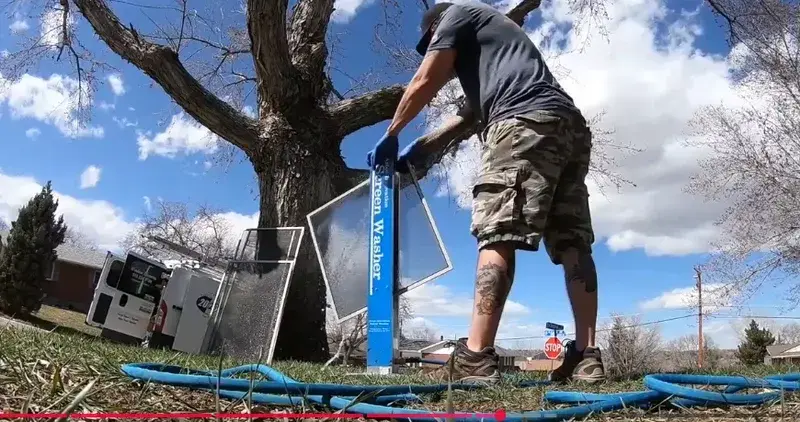
Can Pressure Washing Damage Windows, Screens or Seals?
Yes. Pressure washing can damage windows, screens, seals, gaskets, glazing, and frame components when the method is inappropriate for the product.
Window manufacturers and industry guidance are clear about the risk. Andersen lists power washers and pressurized cleaning tools among methods to avoid on its windows and doors. FGIA, the Fenestration and Glazing Industry Alliance, says not to use a pressure washer or high pressure sprayer to wash or rinse windows, doors, or skylights because seals, gaskets, and frame components can be affected.
Simonton warns that high pressure washing can damage glazing and the seal of an insulating glass unit. Pella also tells owners not to power wash several of its screen products.
That does not mean every window near a pressure washing project has been damaged. If something looks different afterward, first identify which part of the window changed and what you actually see. “Pressure washed” describes the event. It does not diagnose the window condition.
A useful way to think about the risk is:
Why Can Pressure Washing Around Windows Be Risky?
A pressure washer changes more than whether a window gets wet.
Rain, a gentle rinse, and concentrated pressure washing are different types of water exposure.
Several variables can affect what happens:
- Water pressure
- Nozzle and spray pattern
- Distance from the window
- Spray angle
- How long an area is sprayed
- Whether the spray is direct or indirect
- Window design
- Screen type
- Existing window condition
- Sealant and weatherstripping condition
- Cleaning chemicals
- Manufacturer restrictions
This is why a universal statement such as “anything under a certain PSI is safe” is not useful guidance for every window.
Rain reaching a window and a concentrated pressurized stream being directed at a window are not the same exposure.
Which Parts of a Window Can Pressure Washing Affect?
A window is more than its glass.
| Component | What matters |
|---|---|
| Glass | Glass type, coating, existing condition, debris, and exposure |
| Exterior glass coating | Product specific care instructions |
| Screen mesh | Material, tension, condition, and direct spray |
| Screen frame | Material, attachment, and existing condition |
| Window frame | Material, finish, joints, and manufacturer guidance |
| Weatherstripping | Existing condition and water direction |
| Perimeter sealant | Joint condition, adhesion, and direct exposure |
| Glazing | Product design and cleaning restrictions |
| Insulated glass unit | Sealed glass system within the sash or frame |
| Tracks and sills | Drainage, water, and debris |
| Hardware | Product design and water exposure |
| Window opening | Installation, flashing, sealant, and water management |
A window is a system, not just a sheet of glass.
Pressure washing risk should not be judged by asking only whether the pane itself can withstand water.
Can You Pressure Wash Window Glass?
Do not assume that you can safely pressure wash a window simply because the glass is designed for exterior use.
Andersen advises against power washers and pressurized cleaning tools on its window and door products.
Simonton also says not to clean its window glass with a high pressure washer. Its guidance warns that extreme spray pressure can damage glazing and the seal of an insulating glass unit.
Manufacturer instructions are more useful than an internet rule based only on pressure or distance.
What PSI Is Safe for Windows?
There is no universal PSI number that overrides the window manufacturer’s instructions.
What reaches the window depends on more than the machine rating. Nozzle type, spray pattern, distance, angle, duration, and the component being sprayed also matter.
Do not choose a “safe window PSI” first. Check whether the window manufacturer approves pressure washing at all.
Is Standing Farther Away Enough?
Distance changes the exposure, but it does not change the manufacturer’s care instructions.
Moving farther away may reduce concentrated force at the surface. It does not turn every pressure washing method into an approved window cleaning method.
Can Pressure Washing Damage or Reveal Problems With Glass?
Physical glass conditions need to be separated from the fact that pressure washing happened nearby.
Cracks and Chips
If a crack or chip is discovered after pressure washing, note its location and condition.
Existing chips, debris, glass condition, and the actual exposure can matter. Manufacturer guidance is stronger about risks to glazing, seals, frames, and other components than it is about claiming that pressure washing will directly shatter intact glass.
The timing tells you when the damage was noticed. It does not automatically establish how it formed.
Scratches
A scratch is physical surface damage.
Pressurized water itself should not be treated as the automatic explanation for every line found on the glass. Abrasive debris or inappropriate cleanup methods can create different concerns.
Existing Conditions That Become Easier to See
Exterior washing can change dirt or residue on the glass and make an existing condition easier to notice.
That might include a scratch, chip, mineral deposit, or other glass condition.
A condition becoming visible after washing does not automatically mean washing created it.
Can Pressure Washing Damage Low E or Tempered Glass?
Glass type matters, but neither label creates a simple yes or no answer.
Low E Glass
Low E coatings are not located in the same place on every glazing product. Some are protected within an insulated glass unit, while certain products can have an exposed surface coating.
Product specific care instructions therefore matter.
Andersen, for example, gives different cleaning restrictions for some coated glass products.
Low E tells you something about the glazing system. It does not tell you that pressure washing is approved.
Tempered Glass
Tempered describes a heat treated glass product with particular breakage characteristics.
It does not mean the entire window assembly is pressure washer approved.
The frame, glazing, seals, screens, coatings, and surrounding joints still matter.
Tempered tells us something about the glass. It does not override the care instructions for the window system.
Can Pressure Washing Damage Window Screens?
Yes.
Screens are one of the clearest reasons not to treat an entire window opening like siding.
Pella tells owners not to power wash several of its screen products, including conventional fiberglass, high transparency, and retractable screen systems.
Possible physical screen problems include:
- Torn mesh
- Stretched mesh
- Bent frames
- Displaced screens
- Damage to delicate screen material
- Problems with retractable screen components
A screen does not need to tear completely before there is a problem.
A screen is designed to allow air through it. That does not mean its mesh is designed to receive concentrated pressurized water.
Are Fiberglass and Aluminum Screens Affected the Same Way?
No.
Fiberglass mesh is flexible and responds differently to physical force than metal mesh. Aluminum mesh can bend or crease. Fine high transparency material may require even more careful handling.
Pella specifically describes some high transparency screen material as more delicate than conventional fiberglass or aluminum screen material and tells owners not to power wash it.
Retractable screens add moving parts and a storage mechanism, so they should also be handled according to the manufacturer’s instructions.
Screen material helps explain how damage may occur. The actual condition tells you what happened.
Can Pressure Washing Damage Window Seals, Caulking or Weatherstripping?
Potentially, but “window seal” can describe several different components.
That distinction matters.
Weatherstripping
Weatherstripping is flexible material around operable window components that helps control air and water.
Exterior Perimeter Sealant
This is the sealant joint between the window and surrounding building materials.
Glazing Seal
Glazing components help hold and seal glass within the sash or frame.
Insulated Glass Unit Seal
A double or triple pane insulated glass unit has a sealed perimeter between its panes.
These parts are not interchangeable.
FGIA warns that high pressure spray can dislodge seals and gaskets. Simonton warns that high pressure can damage sealant around windows and doors. Simonton also specifically warns that high pressure washing can damage glazing and destroy the seal of its insulating glass units.
That last point is manufacturer specific guidance. It should not be turned into a claim that every insulating glass unit will fail when exposed to pressure washing.
Existing condition matters too. Weatherstripping or perimeter sealant may already be worn, brittle, cracked, loose, or deteriorated.
Before blaming “the window seal,” identify which sealing component is actually affected.
Can Pressure Washing Cause Fog Between Double Pane Windows?
Manufacturer guidance gives homeowners a reason to avoid unnecessary high pressure exposure to glazing and insulated glass systems.
But if fog appears between panes after pressure washing, timing alone does not prove that pressure washing caused the seal failure.
Moisture between panes points to a condition inside the insulated glass unit. Ordinary exterior window cleaning cannot reach that space.
Fog after pressure washing is an observation. The condition of the insulated glass unit still needs to be identified.
Can Pressure Washing Cause Water Intrusion Around Windows?
Yes. Concentrated water can create a different exposure from normal rainfall.
A window opening can involve the frame, sash, weatherstripping, sealant, flashing, rough opening, surrounding wall materials, and drainage paths.
If water appears after pressure washing, where it appears matters.
Water Inside the Room
Water reaching interior finishes deserves investigation. It may have traveled through a window component, perimeter joint, surrounding construction, or another path.
Water in a Track or Sill
This is not automatically the same as room side leakage.
Many windows have drainage or weep paths designed to move accumulated water toward the exterior. Accessible drainage openings should remain clear of dirt and debris.
Surface Condensation
Moisture on a surface you can touch is different from water entering through the building opening.
Moisture Between Panes
Between pane moisture points to the insulated glass unit rather than ordinary surface water.
Water appearing near a window tells you where you noticed it, not necessarily where it entered.
If significant or repeated water intrusion occurs, the source may need evaluation by an appropriate window or building professional.
Does a Window’s Rain Rating Mean It Is Safe to Pressure Wash?
No.
Windows can be tested for resistance to water penetration under defined conditions. That does not make a pressure washer an approved cleaning tool.
ASTM E1105 is a controlled field test used to evaluate water penetration resistance of installed exterior window and related assemblies under specified water and pressure conditions.
A homeowner directing a pressure washer at a window is not performing that standardized test.
A window’s water resistance rating is not permission to aim a pressure washer at it.
Can Pressure Washing Damage Window Frames, Tracks or Hardware?
Potentially.
Window frames can be made from vinyl, aluminum, fiberglass, wood, composite materials, or clad systems. Those materials and finishes do not all have identical care requirements.
Andersen advises against power washers and pressurized cleaning tools on its products.
Water and displaced debris can also reach tracks, sills, locks, rollers, hinges, operators, and other components.
After exterior washing, you might notice:
- Dirt pushed into a track
- Standing water
- Debris that moved rather than disappeared
- A hardware issue that was already developing
- A drainage area that needs inspection
More water in a track does not necessarily mean the track is cleaner.
Should Window Screens Be Removed Before Pressure Washing a House?
If a screen will receive direct pressurized spray, removing or protecting it according to the product instructions can reduce exposure.
But screen designs vary.
Some screens remove from the interior. Some use different clips or attachment systems. Others retract into the window or door.
Pella recommends gentle cleaning of conventional screens rather than power washing them.
Do not force an unfamiliar screen out of its frame just because exterior washing is scheduled.
Should Windows Be Closed and Locked Before Exterior Washing?
Operable windows should be properly closed and secured according to their product instructions before exterior washing around them.
But:
closed and locked does not mean pressure washer approved.
Securing the window puts it in its intended closed position. It does not override manufacturer restrictions on direct high pressure cleaning.
Should You Cover Windows Before Pressure Washing?
There is no universal masking rule for every exterior washing project.
Protection may be appropriate when a cleaning chemical or exterior process is incompatible with the glass, coating, frame, hardware, sealant, or another component.
Follow the instructions for both the window product and the cleaning product being used.
This matters because:
Pressure is only one part of the exposure. Chemistry matters too.
Can Pressure Washing Chemicals Damage Windows?
Potentially.
Mechanical force and chemical compatibility are separate questions.
A cleaning product can create a problem even when applied at lower pressure if it is incompatible with a particular coating, frame finish, sealant, hardware, or other material.
Relevant factors include:
- Cleaning product
- Concentration
- Contact time
- Glass or exposed coating
- Frame material
- Hardware
- Sealant
- Rinsing requirements
Window manufacturers publish their own care instructions and cleaning restrictions.
A lower pressure application can still be the wrong process if the chemical is wrong for the window.
Is Soft Washing Safer for Windows Than Pressure Washing?
Lower pressure changes one part of the exposure.
It does not automatically make every soft washing process appropriate for every window.
You still need to consider:
- cleaning chemistry
- water direction
- window condition
- screen exposure
- coatings and finishes
- manufacturer instructions
The useful distinction is:
Lower pressure changes one variable. It does not automatically make every chemical or application method safe for every window system.
Is a Garden Hose Safer Than a Pressure Washer Around Windows?
A normal garden hose generally does not create the same concentrated spray as pressure washing equipment.
But water direction and force still matter.
FGIA distinguishes normal rinsing from high pressure spraying and warns against pressure washers and high pressure sprayers on window assemblies.
That gives us a useful distinction:
Rinsing is not the same thing as pressure washing.
For coastal maintenance, gentle rinsing may be appropriate when allowed by the window manufacturer. That does not mean the same window should be blasted with pressurized equipment.
Can Pressure Washing Cause Hard Water Spots on Windows?
Pressure does not create hard water.
Hard water spots form when mineral containing water reaches glass and leaves deposits as the water dries.
If water used during exterior washing contains dissolved minerals and droplets dry on the glass, spots can remain.
The pressure changes how the water reaches the window.
It does not create the minerals.
Pressure changes water delivery. Water chemistry determines whether mineral deposits can be left behind.
Established mineral deposits also are not automatically removed by using more pressure.
A harder to remove deposit does not call for harder water pressure.
Why Do Windows Look Spotted or Hazy After Pressure Washing?
Several conditions can look similar from a few feet away.
Possibilities include:
- Dried mineral containing water
- Loosened dirt redistributed onto the glass
- Cleaning product residue
- Existing hard water deposits
- Ordinary exterior film
- A glass or coating condition
- Scratches
- Moisture between panes
Let temporary surface water dry, then inspect what remains.
The next step depends on the condition, not simply on the fact that pressure washing happened first.
Can Pressure Washing Remove Paint From Window Glass?
Do not use pressure washing as a universal paint removal method.
Paint contamination creates a different set of questions:
- What material is on the glass?
- What glass or coating is underneath it?
- What removal method is compatible with that surface?
Increasing water pressure does not answer those questions.
If exterior painting is part of the same project, protect the windows during painting and evaluate any paint contamination separately afterward.
What Should You Check After a Home Has Been Pressure Washed?
If you are concerned about the windows after exterior washing, inspect the components separately.
Check the Glass
Look for cracks, chips, visible scratches, residue, spots, or haze.
Check the Screens
Look for tears, stretched mesh, bent frames, or screens that are no longer seated correctly.
Check Operable Windows
Do they open, close, and secure normally?
Check Weatherstripping and Perimeter Joints
Look for material that is visibly torn, displaced, cracked, loose, or deteriorated.
Check Tracks and Sills
Look for unexpected debris or standing water and confirm accessible drainage openings are not blocked.
Check Indoors
Look for unexpected moisture around the opening.
Check Between the Panes
Determine whether haze is on a surface you can touch or appears sealed inside the glass unit.
Document what you observe before trying an aggressive repair or cleaning method.
Clear photographs can also be useful if another contractor or window professional needs to evaluate the condition.
What Should You Do If a Window Leaks After Pressure Washing?
First, stop directing pressurized water at that area.
Then:
- Dry accessible interior moisture.
- Note exactly where the water appeared.
- Check whether the window was properly closed.
- Look at visible weatherstripping.
- Look for obvious gaps or deterioration around the perimeter.
Check accessible tracks and drainage areas.
Distinguish room side water from moisture between panes.
Photograph what you observe.
Watch for repeated water intrusion under normal conditions.
Contact an appropriate window or building professional if the source requires diagnosis or repair.
Do not repeatedly blast the window in an attempt to reproduce the leak.
A controlled window water penetration investigation and pressure washing are not the same process.
What Should You Do If a Screen Is Damaged After Pressure Washing?
First distinguish contamination from physical damage.
Window cleaning can remove dirt from an intact screen.
It cannot reverse:
- torn mesh
- stretched mesh
- a bent screen frame
- a damaged retractable mechanism
If the screen is physically damaged, cleaning and repair are different services.
Cleaning changes contamination. It does not reverse physical screen damage.
What Should You Do If Windows Look Dirty After Pressure Washing?
Do not automatically pressure wash them again.
First identify what remains.
Is it:
- ordinary exterior film?
- dried water spots?
- cleaning product residue?
- hard water deposits?
- coastal residue?
- paint or construction material?
- a scratch?
- haze between panes?
The answer determines the next step.
More pressure is not the diagnostic step.
Should Windows Be Professionally Cleaned Before or After Pressure Washing?
For a whole house exterior wash, the final window cleaning usually makes more sense afterward.
Exterior washing can put water, cleaning solution, loosened debris, or residue onto glass that was already cleaned.
A useful sequence is:
A pre wash inspection can still be useful if scratches, hard water deposits, damaged screens, cloudy glass, or other visible conditions should be documented.
The simple rule is:
Inspect before. Final clean after.
What If Pressure Washing Is Part of Exterior Painting?
When house washing is part of preparation for exterior painting, keep the project sequence simple:
Actual project requirements can vary.
The main principle is that final window cleaning should follow exterior work likely to put water, debris, paint, or residue back onto the glass.
Does San Clemente’s Coastal Environment Change the Risk?
Not fundamentally.
A window near the ocean still has product specific cleaning instructions.
Coastal exposure can, however, affect what accumulates on exterior surfaces and how often maintenance is needed.
For homes closer to the water around the Pier Bowl or North Beach, salt related exterior residue may make periodic cleaning or rinsing more relevant.
That does not justify increasing pressure.
A window that needs more frequent maintenance does not automatically need more aggressive cleaning.
Marine layer moisture, rain, sprinkler water, gentle rinsing, and pressure washing are also different types of water exposure.
Water source matters. Water force matters. Water direction matters.
What About Older Windows or Windows With Existing Damage?
Existing condition matters more than age alone.
An older or weathered window may already have cracked sealant, worn weatherstripping, damaged screens, chipped glass, frame deterioration, blocked drainage, or an insulated glass problem.
But age does not prove that any of those conditions exist.
A newer window is not automatically pressure washer approved either.
New does not mean pressure washer approved. Old does not automatically mean defective.
When Is Pressure Washing Not the Real Window Problem?
The exterior washing event and the window condition are not always the same problem.
White Rings or Spots
These may be mineral deposits rather than physical window damage.
Fog Between Panes
This points to an insulated glass condition rather than dirt on the accessible surface.
A Linear Mark
It may need to be evaluated as a scratch.
Torn or Stretched Mesh
That is physical screen damage rather than dirty glass.
Water Near the Opening
The water path needs to be identified.
Exterior Haze
It may be surface contamination, mineral deposits, cleaning residue, or another glass condition.
Paint or Stucco Residue
This is a different contamination category and may require a different cleaning scope.
The central rule remains:
Pressure washing describes the event. The condition found afterward determines the next question.
How We Evaluate Windows After Exterior Pressure Washing
If your San Clemente property has already been pressure washed and the windows look different afterward, we start with what can actually be observed.
Our window cleaning process is to:
- Ask what exterior work was performed.
- Identify the windows and screens involved.
- Look at accessible glass condition.
- Separate ordinary dirt from persistent deposits or residue.
- Check visible screen condition where relevant.
- Consider glass or coating type where relevant.
- Distinguish accessible surface haze from between pane haze.
- Match the window cleaning method to the glass, condition, and access.
- Protect surrounding property as required.
- When screen cleaning is included, remove the screen, clean it, allow it to dry or drain as appropriate, and reinstall it.
- Reassess remaining marks.
- Explain when an observed condition falls outside routine window cleaning.
- Complete a final walkthrough with the customer.
We can evaluate what window cleaning can address without pretending every condition found after pressure washing is a window cleaning repair.
Pressure Washing Around Windows: Homeowner Checklist
Before Exterior Washing
Identify the window or door manufacturer where possible.
Review relevant care instructions.
Note existing cracks, scratches, cloudy panes, and damaged screens.
Make sure operable windows are properly closed and secured.
Identify retractable or delicate screens.
Note obvious weatherstripping or sealant deterioration.
Protect windows from incompatible cleaning chemicals where required.
Photograph existing concerns.
After Exterior Washing
Inspect screens.
Look at the glass for new visible conditions.
Check for unexpected water indoors.
Check accessible tracks and sills.
Look at visible weatherstripping and perimeter joints.
Let temporary surface water dry.
Reassess remaining haze and spots.
Do not diagnose every mark as pressure damage.
Schedule appropriate final window cleaning if needed.
Can Pressure Washing Damage Windows, Screens or Seals? FAQs
Can Pressure Washing Damage Windows?
Yes. Window manufacturers and industry guidance warn against direct high pressure washing of window assemblies because glazing, seals, gaskets, frames, screens, and other components can be affected. That does not mean every window near exterior washing has been damaged.
Can Pressure Washing Damage Window Seals?
Potentially. But “window seal” can mean weatherstripping, perimeter sealant, glazing components, or the seal of an insulated glass unit. Identify the affected component before diagnosing the problem.
Can Pressure Washing Damage Window Screens?
Yes. Pella specifically tells owners not to power wash several conventional, high transparency, and retractable screen products.
Can Pressure Washing Crack a Window?
Glass damage is possible under some conditions, but a crack found after pressure washing does not by itself establish the exact cause. Existing glass condition, chips, debris, and the actual exposure can matter.
Can Pressure Washing Cause Fog Between Double Pane Windows?
High pressure washing is not recommended around insulated glass systems, but fog noticed afterward does not by timing alone prove that pressure washing caused the seal failure. Between pane moisture points to a condition inside the insulated glass unit.
Can Pressure Washing Cause Hard Water Spots?
Pressure does not create hard water. Mineral deposits can remain when mineral containing water reaches the glass and dries there.
Is Soft Washing Safer Around Windows?
Lower pressure changes one part of the exposure, but chemistry, water direction, window condition, screens, coatings, and manufacturer instructions still matter.
Should Windows Be Cleaned Before or After Pressure Washing?
Final window cleaning usually makes more sense after whole house exterior washing. Inspect first when useful, complete the exterior washing, then clean the windows to their final condition.
Why Is There Water Inside After Pressure Washing?
Water may have traveled through a window component, perimeter joint, surrounding construction, or another path. Where water becomes visible does not always identify where it entered.
Windows or Screens Look Different After Exterior Pressure Washing?
If your San Clemente windows show spots, haze, residue, or screen concerns after exterior washing, the next step is identifying what actually changed.
Surface dirt, mineral deposits, physical screen damage, scratches, room side water intrusion, and between pane fog are different conditions.
We can assess the window cleaning scope, clean appropriate surfaces, and explain when a remaining condition falls outside routine window cleaning.
References
- Fenestration and Glazing Industry Alliance: Caring for Your Windows, Doors & Skylights. Industry guidance covering pressure washers, high pressure water, seals, gaskets, frames, drainage, weatherstripping, and window maintenance.
- Andersen Windows & Doors: Manufacturer care and maintenance guidance covering pressurized cleaning tools, glass, frames, coatings, screens, and coastal maintenance.
- Simonton Windows & Doors: How to Clean Vinyl Windows and Doors. Manufacturer guidance warning against high pressure washing of glass and discussing possible damage to glazing and insulating glass unit seals.
- Pella: Window and Patio Door Owner’s Manual. Manufacturer guidance for conventional fiberglass, high transparency, and retractable screen products, including instructions not to power wash specified screens.
- ASTM International: ASTM E1105, Standard Test Method for Field Determination of Water Penetration of Installed Exterior Windows, Skylights, Doors, and Curtain Walls. A controlled field testing method for evaluating water penetration resistance of installed exterior assemblies.