
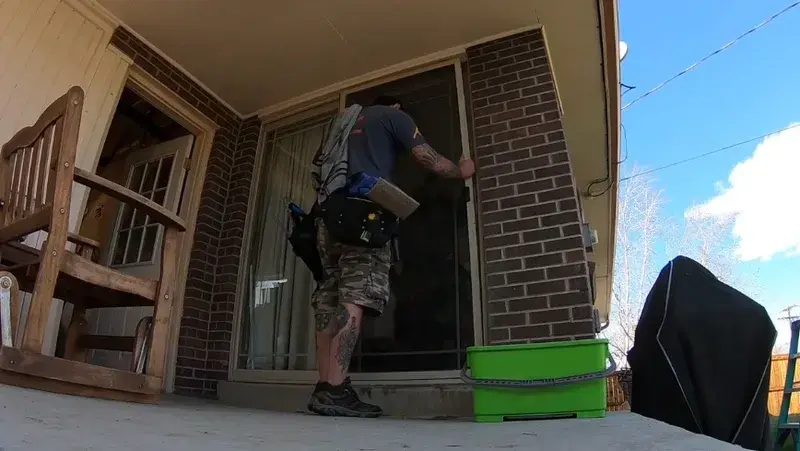
Window Cleaning for Property Managers in San Clemente
Window cleaning for property managers in San Clemente involves more than getting dirt off the glass.
A manager may need to determine which windows are included, who is responsible for them, whether interior access is needed, how service fits around tenants or customers, and whether a visible problem is actually something routine cleaning can fix.
A storefront on Avenida Del Mar, an office near Calle Negocio, an HOA common area, and a managed rental property may all need window cleaning. They should not automatically receive the same scope or schedule.
A useful way to think about the work is:
Property managers do not just manage cleaning dates. They manage scope, access, occupants, and property condition.
What Should Property Managers Expect From a Window Cleaning Service?
Start with a clearly defined job.
Before service, the manager and window cleaning company should know:
- Which property, building, or unit is included
- Who can approve the work
- Which glass is included
- Whether the service is exterior only or includes interior glass
- Whether screens, tracks, frames, or sills are included
- Which areas require access
- Whether those areas are occupied or vacant
- Whether unusual glass conditions are already visible
- Whether the service is one time or recurring
This matters even more when the work repeats.
A calendar can tell a vendor when to arrive. It cannot tell the vendor whether Suite 2 is included, whether an occupied unit requires access, or whether a mineral deposit was already present on a lower window.
Recurring service works better when the scope is repeatable, not merely when the date repeats.
What Types of Managed Properties Need Window Cleaning?
Property managers can oversee very different properties, and each creates a different window cleaning problem.
| Property situation | Main management concern | Typical scope question |
|---|---|---|
| Storefront | Customer activity and access | Exterior glass and entry doors |
| Office | Staff or tenant access | Exterior and approved interior glass |
| Multi tenant property | Different occupants and contacts | Common versus tenant controlled areas |
| HOA common area | Responsibility and access | Which common area glass is included |
| Rental turnover | Vacancy and make ready sequence | Interior and exterior as needed |
| Irrigation facing glass | Recurring mineral spotting | Cleaning plus review of the water source |
| Post construction property | Paint, adhesive, dust, or other residue | Specialty initial scope before maintenance |
Property type helps define the management problem. The actual glass, condition, and access define the cleaning job.
What Should Be Included in a Property Management Window Cleaning Scope?
This should be settled before work begins.
Depending on the property and approved service, the scope may include exterior window glass, agreed interior glass, storefront or display glass, entry doors, lobby glass, common area glass, sliding glass doors, screens, tracks, frames, sills, or appropriate hard to reach windows.
Do not assume all of those are automatically included.
A multi tenant property, for example, might have exterior glass throughout the building, both sides of the windows in one vacant suite, common entry doors, and no interior service inside occupied suites.
That is one address, but it is not one identical scope.
One property address does not necessarily mean one cleaning scope.
This prevents a common problem after service. If screens, tracks, mineral deposits, or interior glass were never included, they should not become assumed parts of the job after the fact.
Define the scope before measuring the result.
Who Is Responsible for the Windows?
There is no universal answer.
Responsibility can depend on the property type, lease, management agreement, HOA governing documents, location of the glass, and approved maintenance responsibilities.
At a commercial property, exterior building glass may be managed differently from interior suite glass. Shared entry doors may have a different responsibility from a tenant’s storefront.
The same issue can arise in an HOA community where common area glass and individually controlled residential windows may fall under different responsibilities.
A window cleaning company should define its cleaning scope. It should not interpret leases or HOA governing documents for the parties involved.
Confirm responsibility first. Then define the work.
How Does Window Cleaning Work at a Multi Tenant Property?
Start by separating common areas from tenant controlled areas.
One property may contain:
- common exterior windows
- storefront glass
- shared entrances
- tenant suites
- office interiors
- locked areas
- different business hours
- different contacts
Exterior glass may be accessible without entering a suite. Interior office windows may require someone to provide access. One storefront may be serving customers while another tenant is closed.
A useful sequence is:
One building can therefore contain several access conditions even when one property manager oversees the entire site.
How Should Access and Scheduling Be Coordinated?
The answer depends on where the work takes place.
Exterior only service may require little or no interior access. Cleaning inside an office, retail suite, condo, or occupied rental is different.
Before service, confirm whether gates are locked, tenant suites are included, occupied spaces require entry, alarms or building procedures apply, and someone is authorized to provide access.
For occupied California residential rentals, management should also coordinate entry according to applicable law and the property’s arrangements. California Civil Code Section 1954 permits entry in specified circumstances, including to supply necessary or agreed services, and establishes notice and access requirements in many situations.
Window cleaning does not replace those requirements.
Scheduling should also reflect how the property is used. A storefront on Avenida Del Mar can present a different scheduling issue from an office near Calle Negocio or a vacant rental between tenants.
Our confirmed service hours are Monday through Saturday, 8:00 AM to 6:00 PM.
The practical question is:
When can the approved glass be accessed with the least conflict with normal property activity?
How Should Recurring Window Cleaning Be Scheduled?
There is no universal schedule for every managed property.
Frequency can depend on property use, customer traffic, window orientation, coastal exposure, irrigation, landscaping, interior use, previous buildup, and the appearance standard the property manager is trying to maintain.
Different areas of the same property may also change at different rates.
Entry doors may collect fingerprints quickly. Street facing storefront windows may show exterior contamination sooner than protected interior glass. Lower windows near irrigation may repeatedly develop mineral spotting. Upper exterior windows may have another exposure pattern.
So one property does not necessarily need one frequency.
A recurring scope might say:
- Building A exterior glass every approved service cycle
- rather than:
Clean whatever looks dirty.
The first version is repeatable. The second leaves too much open to interpretation.
The scope should also be updated when the property changes. Tenant turnover, remodeling, new glass, landscaping changes, new sprinkler exposure, or different access arrangements can all change the work.
Recurring service should be consistent without pretending the property never changes.
What If Cleaning Does Not Solve the Glass Problem?
This is where condition matters more than cleaning frequency.
Routine maintenance cleaning can address appropriate surface contamination such as dirt, dust, fingerprints, and removable film.
Other conditions may require separate evaluation.
Hard Water and Sprinkler Spotting
Hard water spots can form when water containing dissolved minerals reaches glass and dries there.
Irrigation is one possible source around landscaped properties, but not every white mark is hard water.
If the same lower windows repeatedly develop mineral deposits after cleaning, check whether sprinklers continue reaching the glass.
Cleaning and irrigation correction solve different parts of the problem.
Cleaning addresses deposits already on the glass. Irrigation adjustment addresses why new deposits may return.
A window cleaner may identify the pattern. A property manager can then coordinate with the appropriate landscaping or irrigation provider.
Scheduling more window cleaning does not correct a sprinkler that continues wetting the same pane.
Cloudy or Fogged Glass
If a window remains cloudy after appropriate surface cleaning, first determine where the remaining condition is located.
Accessible film or residue may be cleanable.
Moisture or haze trapped inside a conventional insulated glass unit cannot be reached by cleaning the room side or exterior surface.
Persistent haze can also have other causes, so stronger cleaning should not automatically be the next step.
When routine cleaning stops changing the condition, diagnosis becomes more useful than frequency.
Scratched Glass
A true scratch is physical damage to the glass. Routine window cleaning cannot wash it away.
Cleaning can sometimes make an existing scratch easier to notice because surrounding dirt or film has been removed. Lighting and viewing angle can also change how visible a scratch appears.
That creates an important property management distinction:
“Visible after cleaning” does not by itself mean “caused by cleaning.”
This matters during rental turnovers too.
Finding a scratch after cleaning does not establish when it occurred or who caused it.
Cleaning can reveal a condition. It cannot establish its history.
Construction Residue
Paint, adhesive, labels, sealant, stucco material, and other construction contamination should not automatically be treated like ordinary window dirt.
The glass type, exposed coatings, contamination, and proposed removal method can matter.
A property that has just completed remodeling or tenant improvements may therefore need an initial specialty assessment before it moves into routine maintenance cleaning.
A recurring maintenance scope should not silently turn specialty restoration into routine cleaning.
How Should Turnovers, Painting, and Tenant Improvements Be Sequenced?
Window cleaning works best when it fits the rest of the property work.
During a rental turnover or tenant improvement, several vendors may be active within a short period.
A useful sequence is:
Avoid completing the final window cleaning and then scheduling work that can put paint, adhesive, dust, runoff, or construction debris back onto the glass.
This can apply to painting, stucco work, building washing, pressure washing, landscaping work, construction, and sign installation or removal.
For a vacant rental, the absence of a tenant can also make interior access easier. But vacancy itself does not prove every window needs cleaning.
Inspect the condition first.
Local property management work can include move outs, turnover maintenance, and rental preparation, which is why window cleaning often makes more sense as one step in the make ready process rather than an isolated appointment.
What About a Departing Tenant’s Security Deposit?
Keep the cleaning decision separate from the cost allocation decision.
Ordering window cleaning during a turnover does not automatically determine whether the former tenant can be charged for it.
California’s Attorney General states that residential security deposits may be used for cleaning to return a property to the level of cleanliness present when the tenant moved in, while ordinary wear and tear is not chargeable as tenant damage.
The window cleaner’s role is to perform the approved cleaning work.
Management determines how a cost is allocated under the applicable tenancy and law.
How Does San Clemente’s Coastal Environment Affect Managed Properties?
San Clemente’s coastal setting matters, but it does not give every property the same window condition.
The National Weather Service explains that California marine layer clouds form over adjacent ocean waters and can move inland with the wind. Marine layer depth, terrain, and atmospheric conditions affect how far that influence reaches.
A property near North Beach or the Pier Bowl may have a different exposure pattern from a property farther inland.
Orientation matters too.
Ocean facing glass can experience different conditions from protected glass on the opposite side of the same building. Properties farther inland may still deal with dust, landscaping, irrigation, and ordinary environmental buildup.
That is why a San Clemente address alone should not determine a cleaning schedule.
The property address provides context. The individual pane’s exposure tells us more about what reaches the glass.
Marine layer conditions also should not automatically be diagnosed as hard water or salt buildup.
Weather describes the environment around the window. The material on the glass still needs to be identified.
What Should Property Managers Know About HOA and Common Area Glass?
Window cleaning for HOAs and community associations creates an important responsibility question around managed properties.
Possible common area glass may include clubhouse windows, amenity buildings, shared entry doors, or other association controlled areas.
But common area glass and windows associated with individual residences may have different responsibilities.
Do not assume responsibility from the location of the pane alone.
The association, management company, governing documents, or another authorized source should establish which glass falls within the approved scope.
The same principle applies to commercial common areas.
A property manager may oversee a lobby or shared entrance while individual tenants control their interior suite glass.
The manager determines responsibility. The cleaning scope should follow that decision.
What Information Helps Property Managers Get an Accurate Quote?
A better quote starts with a better defined property.
Useful information includes:
- Property address and type
- Building, unit, or area to be serviced
- Exterior only or interior and exterior
- Common area or tenant controlled glass
- Stories and access conditions
- Screens or tracks if requested
- Occupied or vacant status
- Visible hard water, paint, or unusual residue
- One time or recurring need
- Scheduling or access restrictions
Photos can also help when a window has unusual contamination or difficult access.
“Window cleaning for our property” can describe several very different jobs.
A clear starting scope reduces surprises later.
How Is Property Management Window Cleaning Priced?
“Property managed” is not a pricing category.
The actual work is.
Pricing can depend on the amount and configuration of glass, property layout, interior and exterior scope, screens and tracks, stories, access, current condition, and specialty contamination.
A two story managed residence with straightforward exterior windows is not the same job as a multi tenant property with storefront glass, common entrances, interior suites, screens, and mineral deposits.
The number of tenants or units alone does not determine the price.
The glass, access, condition, and approved scope do.
Can Multiple Properties Be Managed Under One Window Cleaning Plan?
Yes, they can be coordinated, but each property should still have its own defined needs.
Suppose one manager oversees a retail property near Downtown San Clemente, an office property closer to Rancho San Clemente, and a managed residence where irrigation reaches lower windows.
Giving all three the same scope and frequency simply because they share a property manager would ignore how different they are.
Each property can have its own:
- scope
- access requirements
- glass condition
- exposure
- service frequency
- changes since the previous visit
Multiple properties can be coordinated without pretending they are physically identical.
What Should Property Managers Track Between Visits?
A simple service history can be useful for recurring work.
Track:
- Service date
- Property, building, or unit
- Scope completed
- Access issues
- Persistent glass conditions
- Recurring problem areas
- Changes that may affect future service
For example, if the same lower windows repeatedly develop mineral spots while the rest of the building remains routine, that is useful information.
If a tenant improvement changes the interior glass layout, that matters too.
Good recurring maintenance depends on remembering the property’s condition, not merely remembering the next date.
What Should You Ask a Window Cleaning Vendor?
Price is one question. Scope control is another.
Ask:
- Is the scope clear?
- Are exclusions clear?
- How are occupied or tenant controlled areas handled?
- Who coordinates access?
- How are unusual glass conditions identified?
- Is routine cleaning separated from restoration or specialty work?
- How is recurring frequency decided?
- What happens when the property or scope changes?
- Can the provider explain what normal window cleaning cannot fix?
A provider who treats every cloudy pane as dirt or every white spot as hard water is not giving the property manager much diagnostic information.
The useful question is not only:
- Can you clean the glass?
- It is also:
- Can the scope remain clear when the property changes?
How We Approach Window Cleaning for Property Managers in San Clemente
The starting point is the property and requested work, not a generic commercial package.
Our process is:
- Identify the property and requested scope.
- Clarify the interior, exterior, and related surfaces included.
- Review access requirements.
- Consider occupied areas and scheduling needs.
- Assess the current glass condition.
- Separate routine contamination from conditions that may need different treatment.
- Match the cleaning method to the glass, condition, and access.
- Protect surrounding property as required by the site.
- When screen cleaning is included, remove, clean, allow screens to dry or drain as appropriate, and reinstall them.
- Reassess persistent marks rather than automatically increasing cleaning aggression.
- Complete a final walkthrough with the customer or authorized contact where applicable.
- Discuss future maintenance based on actual exposure and condition.
We do not need to call every white spot hard water.
We do not call between pane fog dirt.
We do not treat scratches as contamination.
And we do not assume every managed property needs the same recurring schedule.
The first visit establishes what is already on the glass. Future visits should maintain what cleaning can actually change.
Property Manager Window Cleaning Checklist
Before the Quote
Identify the property, building, or unit.
Confirm who can authorize the work.
Separate common area glass from tenant controlled glass.
Decide whether the request is exterior only or includes interior glass.
Note screens, tracks, hard water, or unusual residue.
Identify occupied areas and access restrictions.
Before Service
Confirm access to the agreed areas.
Handle required occupant communication or notice where applicable.
Confirm changes to the original scope.
Identify painting, construction, landscaping, or other work that may affect the glass.
After Service
Review the agreed scope.
Note conditions that appropriate cleaning did not change.
Record recurring problem areas.
Separate cleaning issues from repair or restoration questions.
Adjust future maintenance when actual property conditions support a change.
A recurring schedule is useful only when the scope is clear enough to repeat.
Window Cleaning for Property Managers in San Clemente FAQs
Do You Work With Property Managers in San Clemente?
Window cleaning can be scoped for managed residential, commercial, multi tenant, and appropriate common area properties in San Clemente. Start by identifying the property, glass, access, and requested service.
Can You Service Multi Tenant Properties?
Yes, when the scope and access can be coordinated. Common exterior glass, tenant controlled interior windows, storefronts, and shared entrances may have different requirements.
Can Interior and Exterior Glass Be Scheduled Separately?
Yes. They are different surfaces with different exposure, access, and use. Their maintenance needs do not have to be identical.
How Often Should Property Managers Schedule Window Cleaning?
There is no universal interval. Property use, customer traffic, coastal exposure, irrigation, window orientation, interior use, and previous buildup can all affect the appropriate frequency.
Are Screens and Tracks Automatically Included?
Do not assume they are. Screens, tracks, frames, and sills should be clearly included or excluded when the scope is defined.
What If Sprinklers Keep Leaving Spots on the Glass?
First determine whether the marks are mineral deposits. Cleaning can address existing appropriate deposits, while recurring irrigation exposure should be addressed separately if sprinklers continue reaching the glass.
Can Window Cleaning Fix Cloudy or Foggy Glass?
It depends on where the haze is. Accessible surface contamination may be cleanable. Fog or condensation trapped inside a sealed insulated glass unit cannot be reached through normal interior or exterior window cleaning.
What Information Helps With a Property Management Window Cleaning Quote?
Provide the property address and type, areas to be cleaned, interior or exterior scope, access conditions, occupancy status, requested screens or tracks, unusual glass conditions, and whether the need is one time or recurring.
Can Multiple Managed Properties Be Coordinated?
Yes. Multiple properties can be discussed together, but each should still be evaluated according to its own glass, access, condition, exposure, and maintenance needs.
Can a Recurring Scope Change Between Visits?
Yes. Tenant turnover, remodeling, landscaping changes, new glass, construction, or different access arrangements can change the work. Update the scope rather than assuming a recurring property remains unchanged.
Managing Windows Across a San Clemente Property?
Tell us the property type, requested scope, access requirements, and whether you need one time or recurring service.
We can discuss the glass that needs service, interior and exterior scope, access, and visible conditions that may fall outside routine window cleaning.
References
- California Legislative Information: California Civil Code Section 1954. Official state law covering specified circumstances for landlord entry into residential dwelling units and applicable access and notice provisions.
- California Department of Justice, Office of the Attorney General: Landlord Tenant Issues. State guidance on residential security deposits, including permitted cleaning deductions and ordinary wear and tear.
- National Weather Service: Marine Layer Information. Explains California marine layer formation and the movement of marine stratus from ocean waters over land.
- U.S. Census Bureau: QuickFacts, San Clemente city, California. Current demographic and housing data for San Clemente.