

San Clemente Coastal Window Care Guide
San Clemente windows do not all get dirty for the same reason. Exterior glass can collect coastal residue, dust, pollen, everyday outdoor debris, and sprinkler overspray. Even different sides of the same home can develop different conditions.
Routine surface dirt can usually be handled through regular window cleaning. Persistent mineral deposits or unusual haze may need a different approach.
This guide explains what commonly affects window clarity around San Clemente, how to recognize different types of buildup, and how to care for glass, screens, and tracks based on actual exposure.
A useful way to think about coastal window care is:
What reaches the window? → What builds up? → What condition is the glass in? → What care fits?
Why Do Windows Get Dirty So Quickly in San Clemente?
San Clemente sits directly on the Pacific coast, but coastal air is only one part of the picture.
The City of San Clemente describes the area as extending across rugged hills, coastal canyons, and coastline. Properties can therefore differ in elevation, orientation, landscaping, wind exposure, and protection from direct coastal conditions.
A home near North Beach may have a different exposure pattern from a property farther inland in Talega. Even two homes in the same neighborhood can have different window conditions.
Coastal Exposure and Airborne Surface Buildup
Breaking ocean waves release tiny sea spray particles into the atmosphere. NOAA research explains that sea spray aerosols are made primarily of sea salt, along with smaller amounts of other material.
Near the coast, airborne material can settle on exposed exterior surfaces, including glass.
That does not mean every San Clemente window develops the same salt related film. Wind direction, building orientation, surrounding structures, elevation, and protection can all affect what reaches the glass.
For homeowners, the useful point is simple:
Coastal exposure is not measured by distance alone.
Does the Marine Layer Cause Window Buildup?
San Clemente also experiences marine layer conditions, including cool, moist coastal air and periods of low clouds.
The marine layer and salt related surface buildup should not be treated as the same thing.
Marine layer describes an atmospheric condition. Sea spray aerosol comes from ocean processes such as breaking waves. A coastal window may be exposed to both, but morning cloud or moisture alone does not tell you what type of residue is on the glass.
If a window looks hazy, the condition should be identified rather than assuming the marine layer is the only cause.
What About Dust, Wind and Pollen?
Exterior glass also collects ordinary airborne material.
Wind can carry dust and fine debris. Pollen can settle on glass and screens. Material can also collect along frames, sills, and tracks.
Conditions change through the year, so the same window may not develop the same type of buildup every month.
How Do Sprinklers and Landscaping Affect Windows?
Landscaping can affect windows in several ways.
Nearby plants can contribute pollen and organic debris. Exposed soil can contribute dust. Irrigation can send water toward nearby glass.
When sprinkler droplets reach a window and dry, dissolved minerals can remain on the surface. Repeated overspray can gradually create visible mineral deposits.
That is different from ordinary coastal film.
What Is the Hazy Film on Exterior Windows?
A hazy window does not automatically have one specific problem.
The appearance can come from ordinary dirt, coastal surface residue, dust, pollen, cleaning residue, mineral deposits, or a condition involving the glass itself.
Fogging between panes is another problem entirely.
| What You See | Possible Cause | Is Routine Cleaning Likely to Help? |
|---|---|---|
| Light exterior film | Dust or coastal surface buildup | Often |
| Loose dust or pollen | Airborne debris | Often |
| White spots or rings | Mineral deposits | Depends on the buildup |
| Lines or smears | Cleaning residue or streaks | Often |
| Persistent rough or cloudy marks | Mineral buildup or another glass condition | Assessment may be needed |
| Haze between panes | Insulated glass or seal issue | No, not through surface cleaning |
This is why it helps to identify where the haze is and what it looks like before deciding that the window simply needs stronger cleaning.
If glass still appears cloudy after the accessible surfaces have been cleaned, see our guide Why Are My Windows Cloudy After Cleaning?
Why Do Some San Clemente Windows Get Dirtier Than Others?
The city matters, but the individual property matters more.
A blanket rule such as “every coastal window needs the same care” ignores how buildings are actually exposed.
Coastal Facing vs More Protected Glass
Windows with greater exterior exposure may collect airborne material differently from glass protected by walls, roof overhangs, neighboring structures, or other features.
Two windows on opposite sides of one home can experience different wind, sun, irrigation, and landscaping conditions.
Why Is Buildup More Noticeable on View Glass?
San Clemente has homes with large windows facing the coast, hills, canyons, and open spaces.
Large view windows do not necessarily become dirty faster simply because they are large. Haze, spots, fingerprints, and streaks can simply be easier to notice across a wide area of glass.
Changing daylight can make that buildup even more obvious.
What About Hillside and More Inland Properties?
Moving inland does not eliminate window maintenance issues.
San Clemente extends from the coastline into hills and valleys. Areas such as Talega, Forster Ranch, and Rancho San Clemente can therefore have different exposure conditions from properties closer to San Clemente Pier or North Beach.
A more inland property may have less direct marine exposure while still dealing with wind, dust, landscaping, irrigation, and pollen.
The correct question is not simply:
How far is the house from the ocean?
It is:
What is this particular window exposed to?
Can Different Sides of the Same Home Need Different Care?
Yes.
One side may receive more coastal or wind exposure. Another may sit next to sprinklers. A protected side may stay cleaner longer. Patio doors may collect fingerprints and pet marks even when nearby windows still look clean.
This gives us one of the most useful rules for coastal window care:
Location alone does not determine window condition. Property level exposure does.
How Do Sprinklers Create White or Cloudy Spots on Windows?
Sprinkler overspray can create a repeating cycle:
Water reaches the glass → Water evaporates → Dissolved minerals remain → Repeated exposure adds more deposits
The result may appear as white spots, rings, or cloudy areas.
This is different from loose dust or a light exterior film.
Are Ordinary Water Spots and Mineral Buildup the Same Thing?
Not always.
A recent dried water mark may be relatively easy to address. Repeated mineral deposits that have accumulated over time can become a different cleaning problem.
This is why persistent white spots should not automatically be treated as ordinary dirt.
Why Does Repeated Sprinkler Exposure Matter?
Repeated wetting and drying can continue adding deposits to the same area of glass.
If a sprinkler regularly reaches the window, cleaning alone may address the visible result without reducing the source.
Should You Just Clean Sprinkler Facing Windows More Often?
Cleaning can help maintain the surface, but prevention matters too.
If irrigation regularly reaches the glass, check whether the sprinkler direction can be adjusted so less water hits the window.
For established deposits, see Hard Water Stain Removal San Clemente and How to Prevent Hard Water Spots on Windows.
How Do Dust, Wind, Pollen and Landscaping Affect Your Windows?
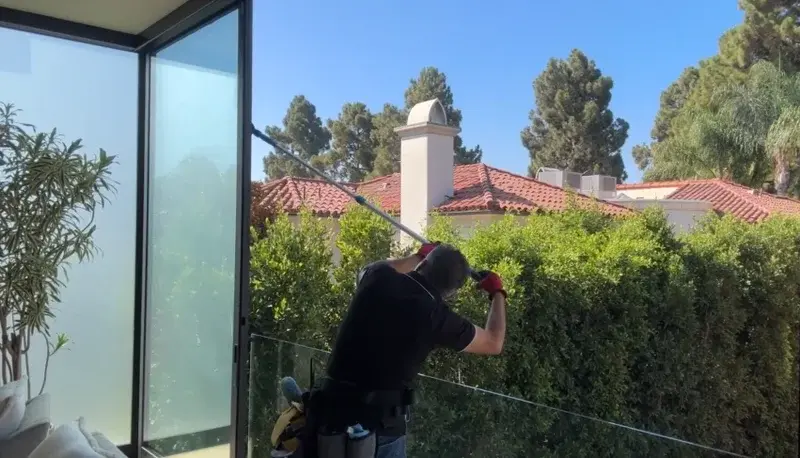
Not every coastal window problem comes from the ocean.
Ordinary outdoor conditions contribute a large part of what homeowners see on glass.
Dust and Wind
Dust can settle on exterior glass, frames, screens, sills, and tracks.
Wind can move loose material around the property. A protected window and a wind exposed window may therefore look different even if both were cleaned at the same time.
Pollen and Fine Outdoor Debris
Pollen and fine debris can collect on exterior glass, but screens are especially noticeable collection points because of their mesh surface.
The amount varies with surrounding vegetation and seasonal conditions.
Landscaping Around Windows
Plants close to windows can affect maintenance through pollen, leaves, small debris, irrigation, and soil around landscaped areas.
Landscaping can also make physical access to a window more difficult.
The main takeaway is:
The source of buildup can be just as important as how often the glass is cleaned.
Why Do Screens and Tracks Matter in Coastal Window Care?
Looking only at the glass can give an incomplete picture of the window area.
Screens and tracks collect their own outdoor material and may need attention based on condition.
What Collects on Window Screens?
Screens can hold dust, pollen, fine outdoor debris, and insect material.
A clean pane of glass next to a heavily soiled screen may still leave the overall window looking unfinished.
Condition and exposure should guide when screens need attention.
What Collects in Window Tracks?
Window tracks can accumulate dust, pollen, insects, small debris, and material carried in through everyday use.
Patio and sliding door tracks may collect additional debris from frequent indoor and outdoor traffic.
Does Window Cleaning Automatically Include Screens and Tracks?
Not necessarily.
Cleaning glass, cleaning screens, and detailed track cleaning are different parts of the overall window scope.
Before comparing window cleaning quotes, check what is actually included.
For more detail, see our Window Screen and Track Cleaning Guide.
Why Do Patio Doors and View Windows Often Show Dirt First?
Sliding glass and patio doors are exposed to both outdoor conditions and everyday household use.
Fingerprints, hand marks, pets, children, and regular movement between indoor and outdoor spaces can make marks appear quickly. Their large glass area can also make spots and smears easy to see.
The same principle applies to large view windows. A small amount of haze on a small pane may go unnoticed. Across a large window facing the ocean or an open hillside, the same film can be much more obvious.
High touch areas may therefore need attention sooner than protected windows elsewhere on the property.
Why Do Spots and Streaks Look Worse in Direct Sunlight?
Direct or angled sunlight can make residue on glass easier to see.
Streaks, fingerprints, dust, mineral spotting, and fine surface marks can become more visible when light hits the glass from certain angles.
The sunlight did not necessarily create the problem. It may simply reveal something that was already there.
Is It a Streak, Mineral Spot or Glass Problem?
A few visual clues can help.
Smears or streaks may relate to cleaning residue or technique.
Persistent white spots can point toward mineral deposits.
Scratches are a physical surface condition rather than dirt.
Fog between panes can indicate a problem inside an insulated glass unit and cannot be corrected by cleaning the exterior surface.
For deeper diagnosis, see How to Clean Windows Without Streaks and Why Are My Windows Cloudy After Cleaning?
Does Coastal Exposure Change How Often Windows Should Be Cleaned?
It can, but there is no single schedule that fits every San Clemente home or every window.
Frequency depends on exterior exposure, sprinklers, landscaping, dust, pollen, screens, patio use, glass condition, and how clear you want the windows to remain.
Should Every Window Be Put on the Same Schedule?
No.
Exposed exterior glass may need attention sooner. Sprinkler facing windows may need both maintenance and irrigation correction. Patio doors may need light cleaning because of household traffic, while protected interior glass may remain clear longer.
The better approach is to watch how different windows actually change over time.
For a complete frequency framework, see How Often Should You Clean Your Windows in San Clemente?
Does Your Glass Need Routine Cleaning or Hard Water Treatment?
This distinction can prevent homeowners from repeatedly treating the wrong problem.
| Routine Cleaning Is More Likely Appropriate For | Specialty Assessment May Be Needed For |
|---|---|
| Dust | Persistent white mineral spots |
| Pollen | Repeated sprinkler deposits |
| Fingerprints | Stubborn cloudy mineral film |
| Light exterior grime | Deposits that remain after routine cleaning |
| Ordinary surface film | Possible glass damage or etching |
| Typical patio door marks | An uncertain glass condition |
When Is Routine Window Cleaning Usually Enough?
Routine cleaning is generally intended for normal surface contamination such as dust, pollen, fingerprints, light grime, and ordinary exterior film.
When Is Mineral Buildup a Different Problem?
Persistent mineral deposits may need more than routine cleaning.
The International Window Cleaning Association distinguishes routine window cleaning from nonroutine work involving conditions such as hard water stains, restoration, and other tenacious deposits.
The distinction matters because glass condition and any coatings should be considered before stronger products or methods are selected.
If ordinary cleaning does not remove persistent white spotting, simply scrubbing harder is not a good diagnostic method.
What If the Spots Still Will Not Come Off?
A remaining mark may be mineral buildup, surface damage, etching, or another glass condition.
At that point, identifying the condition becomes more important than repeating the same cleaning method.
See Hard Water Stain Removal San Clemente, How to Remove Hard Water Spots From Windows, and Hard Water Stains vs Glass Etching for those specific problems.
How Can San Clemente Homeowners Reduce Window Buildup?
Outdoor windows cannot be kept permanently free of dust and residue, but some sources of unnecessary buildup can be reduced.
1. Reduce Sprinkler Overspray Where Possible
Check irrigation near windows and redirect water that repeatedly reaches the glass where practical.
2. Pay Attention to the Most Exposed Sides of the Property
Watch which windows repeatedly develop film, dust, spotting, or other visible buildup first rather than assuming every side needs the same attention.
3. Maintain Screens and Tracks Based on Condition
Screens and tracks can collect pollen, dust, insects, and outdoor debris even while the pane still appears reasonably clear.
4. Maintain High Touch Patio Glass When Needed
Patio and sliding doors may show fingerprints, hand marks, and pet marks sooner than other windows. Light attention between complete cleanings may be enough.
5. Do Not Treat Every Persistent Spot as Ordinary Dirt
If white spotting or haze remains after normal surface cleaning, identify the condition before repeatedly using stronger methods.
6. Check Frames and Exposed Hardware Too
Coastal window care is not limited to the pane.
Exterior frames and exposed window hardware can collect dirt and coastal residue. Cleaning methods should suit the frame material, finish, hardware, and manufacturer guidance.
Do not assume that a product suitable for glass is automatically suitable for every surrounding surface.
7. Base Maintenance on Actual Exposure
Exposed exterior windows, sprinkler facing glass, patio doors, and protected interior windows may not need attention at the same time.
8. Recognize Conditions Cleaning Cannot Repair
Fogging between panes, scratches, damaged seals, and some forms of glass damage are not ordinary surface cleaning problems.
Prevention can reduce unnecessary buildup, but outdoor glass will still collect material over time.
What Is a Simple Coastal Window Check for Your San Clemente Home?
A quick visual check can help determine whether you are dealing with ordinary buildup or something that deserves closer attention.
Look at five things.
1. Glass Clarity
Do you see ordinary film, dust, fingerprints, or something more persistent?
2. Spot Pattern
Are the marks random, or do white spots repeatedly appear where sprinklers reach the glass?
3. Exposure
Is the window exposed to coastal air or wind? Is it next to landscaping or irrigation? Is it protected by another part of the building?
4. Screens and Tracks
Are dust, pollen, insects, or outdoor debris accumulating around the rest of the window?
5. Glass Condition
Does the haze or spotting remain after normal surface cleaning?
Then use what you find to decide what happens next.
| What You Find | Sensible Next Step |
|---|---|
| Ordinary surface dirt | Routine cleaning |
| Dirty screens or tracks | Include appropriate detailing |
| Frequent patio door marks | Light maintenance plus routine cleaning |
| Repeated sprinkler spots | Reduce overspray and assess the deposits |
| Persistent mineral buildup | Consider hard water treatment assessment |
| Fog between panes | Consult an appropriate window or glass professional |
| Scratches or possible etching | Identify the glass condition and adjust cleaning expectations |
This brings the complete coastal care process back to one simple framework:
Ask:
What reaches the window?
What has built up?
What condition is the glass in?
What type of care fits that condition?
Coastal Window Care FAQs
Why Do My Windows Get Dirty So Quickly Near the Coast?
Coastal exposure can contribute airborne surface residue, while wind, dust, pollen, landscaping, sprinklers, and everyday use can add other types of buildup.
How quickly a particular window becomes dirty depends on its actual exposure rather than coastal location alone.
Does Salt in Coastal Air Make Windows Look Hazy?
It can contribute to exterior surface buildup.
Sea spray generated by breaking ocean waves contains sea salt that can become part of the coastal aerosol. However, haze should not automatically be blamed on salt. Dust, pollen, mineral deposits, cleaning residue, and glass conditions can create similar visual symptoms.
Why Do Sprinklers Leave White Spots on Windows?
When sprinkler water reaches the glass and evaporates, dissolved minerals can remain behind.
Repeated exposure can make those deposits more noticeable. Reducing sprinkler overspray can therefore be part of prevention.
Can Regular Window Cleaning Remove Hard Water Spots?
It depends on the condition.
Light or recent deposits may respond differently from established mineral buildup. Persistent hard water staining may require separate assessment and treatment rather than ordinary routine cleaning.
How Often Should Windows Be Cleaned in San Clemente?
There is no single schedule for every property.
Exterior exposure, sprinklers, landscaping, screens, household use, desired clarity, and current glass condition should guide the frequency.
See How Often Should You Clean Your Windows in San Clemente? for the complete decision guide.
Can Coastal Window Buildup Be Prevented Completely?
No.
Outdoor glass will continue to collect airborne and environmental material. Good maintenance can reduce unnecessary buildup, limit repeated sprinkler exposure, and help identify persistent problems earlier, but it cannot eliminate normal outdoor exposure.
Need Help With Coastal Window Buildup?
If your windows have ordinary exterior buildup, persistent sprinkler spots, dirty screens and tracks, or glass you are not sure can be corrected through routine cleaning, Window Specialists San Clemente can help determine the appropriate cleaning scope for your property.
Call (949) 883-0300 to discuss your windows and get a quote based on your property.
Window Specialists San Clemente
931 Calle Negocio, Suite A
San Clemente, CA 92673
(949) 883-0300
Monday through Saturday
8:00 AM to 6:00 PM