
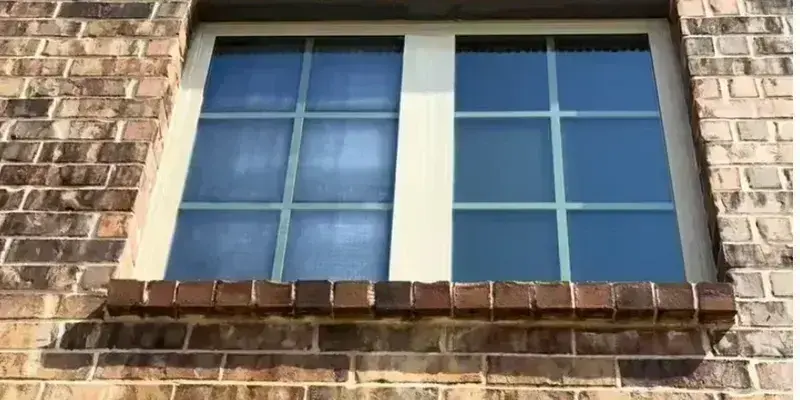
Why Are My Windows Cloudy Even After Cleaning?
Windows can still look cloudy after cleaning when the problem is not ordinary surface dirt. The haze may come from cleaning residue, hard water mineral deposits, construction residue, scratches or other glass damage, or moisture trapped between insulated panes.
The first step is to determine whether the cloudiness is on the interior surface, exterior surface, or between the panes. Each condition points toward a different cause and a different next step.
What Can Make a Clean Window Still Look Cloudy?
A window that looks cloudy is not necessarily still dirty. What you see can provide clues about what remains on or within the glass.
| What You Notice | Possible Cause | Can Cleaning Fix It? |
|---|---|---|
| Smears or streaks | Cleaning residue or technique | Usually |
| Light surface haze | Dust, dirt or surface residue | Often |
| White spots or cloudy film | Hard water minerals | May require separate treatment |
| Rough or persistent mineral marks | Heavy deposits or possible glass damage | Assessment may be needed |
| Fine visible lines | Scratches | No |
| Haze after construction | Construction residue or glass condition | Depends on the cause |
| Fog or moisture between panes | Insulated glass problem | Not through surface cleaning |
| Cloudiness that does not change after surface cleaning | Glass condition or damage | Further assessment may be needed |
The important question is not simply, “How do I clean it again?”
First ask:
Where is the cloudiness, and what does it look like?
First, Find Out Where the Cloudiness Is
Before trying another cleaner or scrubbing harder, determine where the haze appears to be.
Cloudiness on the Outside Surface
Exterior cloudiness may come from ordinary dirt, dust, pollen, coastal surface buildup, sprinkler mineral deposits, or construction residue.
This distinction can matter in San Clemente because exterior windows can face very different conditions.
A window near North Beach or the Pier area may have different exterior exposure from protected glass farther inland. A window in Talega or Forster Ranch may have less direct coastal exposure but still face dust, landscaping, pollen, or sprinkler overspray.
The City of San Clemente describes the community as extending across rugged hills, coastal canyons, and coastline. Properties and even different sides of one property can therefore face different outdoor conditions.
Cloudiness on the Inside Surface
Interior glass can look cloudy because of fingerprints, dust, smudges, cleaning product residue, streaks, or other surface contamination.
If the appearance changes when the accessible glass is properly cleaned, the problem is more likely to be on the surface.
Cloudiness Between the Window Panes
Some windows use two or more panes of glass separated by a sealed space.
If both accessible surfaces appear clean but the haze or moisture seems trapped inside that space, additional surface cleaning is unlikely to solve it.
Moisture can also form on the accessible interior or exterior surface because of temperature and humidity conditions. Surface condensation does not automatically mean there is a problem with the insulated glass unit. The important distinction is whether the moisture is on a surface you can reach or trapped between the panes.
That creates an important diagnostic boundary:
Cloudiness on the glass and cloudiness between the panes are not the same problem.
Could the Window Simply Still Be Dirty?
Yes.
It is useful to rule out ordinary contamination before assuming the glass has a more serious problem.
Fine dust, pollen, fingerprints, light exterior film, residue near the edges, or dirt on nearby screens can affect how clear the overall window looks.
A window may also have more than one condition at the same time. For example, ordinary exterior dirt can sit over mineral spots that remain visible after the dirt is removed.
How Is Surface Dirt Different From Persistent Cloudiness?
Surface contamination should generally change when it is cleaned with an appropriate method.
If dust, fingerprints, or ordinary grime are removed but the same white spots, haze, fine lines, or internal fog remain, another condition may be involved.
For more detail on outdoor exposure, see our San Clemente Coastal Window Care Guide.
Can Cleaning Residue Make Windows Look Cloudy?
Yes.
Cleaning product left on the glass can create a dull film or visible streaks.
Possible causes include using more cleaning solution than needed, working with dirty cloths or tools, incomplete removal of the solution, residue near edges, or going back over areas that have already started drying.
What Is the Difference Between Cloudy Film and Streaks?
Streaks usually appear as lines or smears that follow wiping, washing, or drying.
Residue haze may look more like a thin, uniform film across part of the pane.
The two can occur together.
If the appearance changes when the glass is cleaned again with clean tools and an appropriate method, residue or ordinary surface contamination is more likely than permanent glass damage.
Why Does the Cloudiness Look Worse in Sunlight?
Direct or angled sunlight can make residue, streaks, fingerprints, mineral spotting, scratches, and other surface conditions easier to see.
A window may look clear from one angle and hazy from another.
Sunlight may reveal the problem rather than cause it.
If streaking is the main problem, see How to Clean Windows Without Streaks rather than repeatedly trying stronger cleaning products.
Are Hard Water Deposits Making the Glass Look Cloudy?
They can.
This is especially worth checking when white spotting is concentrated on exterior glass that receives repeated sprinkler overspray.
The process is straightforward:
Water reaches the glass → Water evaporates → Dissolved minerals remain → Repeated exposure adds more deposits
Possible signs include white spots, rings, speckled marks, cloudy mineral film, or spotting that remains after ordinary cleaning.
Repeated sprinkler exposure can affect one section of a home much more than another. A window facing irrigation may develop mineral deposits while nearby protected glass does not.
Why Might Routine Window Cleaning Not Remove Mineral Film?
Routine cleaning and mineral deposit treatment are different jobs.
Ordinary window cleaning is intended to remove appropriate surface contamination such as dust, pollen, fingerprints, smudges, and general grime.
Established mineral deposits can be more difficult.
The International Window Cleaning Association treats hard water stains and other tenacious deposits as nonroutine conditions and warns that improper removal methods can damage glass, coatings, and nearby surfaces.
This means a window can be free of ordinary dirt and still show mineral related cloudiness.
Is It a Hard Water Deposit or Glass Etching?
The appearance alone may not provide a definite answer.
Persistent marks can involve remaining mineral deposits, surface alteration, scratches, or another glass condition.
Do not assume that every white mark that remains after cleaning is permanent etching. At the same time, complete removal should not be promised before the condition of the glass is understood.
For deeper information, see Hard Water Stain Removal San Clemente, How to Remove Hard Water Spots From Windows, and Hard Water Stains vs Glass Etching.
Can Scratches Make a Window Look Hazy or Cloudy?
Yes.
Fine scratches may be difficult to notice under soft light but become much more visible when direct sunlight or another strong light source crosses the glass.
Groups of fine scratches can sometimes create an overall hazy appearance from certain viewing angles.
That is different from dirt sitting on the surface.
Can Window Cleaning Remove Scratches?
No.
Cleaning can remove material sitting on the glass. It does not repair scratches in the glass itself.
A cleaner may make existing scratches easier to notice simply because dirt that previously hid them has been removed.
That does not mean cleaning created the scratches.
What If the Glass Itself Is Damaged?
Not every mark on a window is removable contamination.
Scratches, etching, surface alteration, chips, cracks, or other existing defects can remain visible after the glass has been cleaned.
The distinction is simple:
Cleaning changes what is on the glass. It does not necessarily repair what has happened to the glass.
Why Does Glass Condition Matter Before Treatment?
Because stronger is not always better.
A mark that does not respond to routine cleaning should not automatically lead to more aggressive scrubbing or stronger chemicals.
Glass may have coatings, films, existing scratches, or other surface conditions. The International Window Cleaning Association notes that improper products and removal methods can damage glass, coatings, and adjacent materials.
When the cause is uncertain, identifying the condition first is safer than treating every mark as ordinary dirt.
Is the Cloudiness Actually Between the Window Panes?
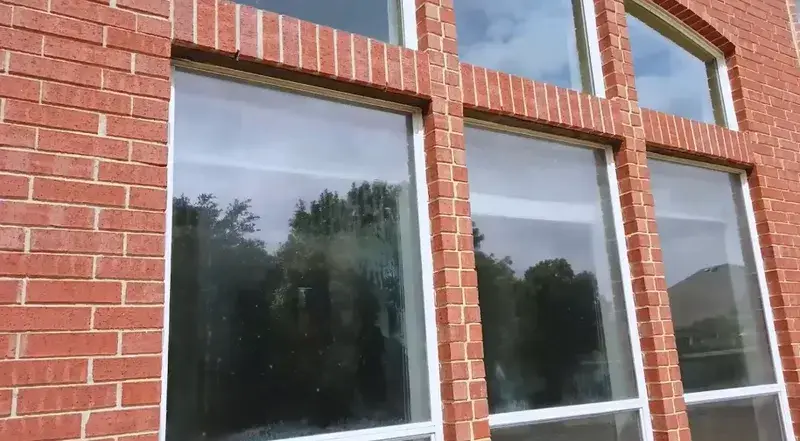
This is one of the most important things to check when cleaning both accessible sides does not change the appearance.
Many modern windows contain multiple panes separated by a sealed space. If moisture or fog appears within that space, wiping the room side or exterior side cannot reach it.
What Are Signs the Fog May Be Between the Panes?
Possible clues include:
- Both accessible surfaces appear clean
- The haze remains in the same location after either side is wiped
- The moisture appears physically inaccessible
- The cloudiness looks as though it sits inside the window rather than on its surface
These clues can help narrow the problem, but a homeowner may not always be able to identify the cause conclusively.
Does Fog Between Panes Mean the Window Seal Has Failed?
Persistent condensation or fogging between panes can indicate a problem with the insulated glass unit or its seal.
However, the exact condition should be evaluated by an appropriate window or glass professional when the cause is uncertain.
Remember that condensation on an accessible interior or exterior surface is different from moisture trapped inside the glass unit.
Between pane fogging is not ordinary surface dirt.
Can a Window Cleaner Remove Fog Between Panes?
Not through ordinary surface window cleaning.
A cleaner can clean the accessible interior and exterior glass. Cleaning those surfaces does not provide access to moisture trapped within a sealed glass unit.
If the problem is inside the unit, a glass or window professional may be the more appropriate next step.
Can Construction Residue Make New Windows Look Cloudy?
Yes.
Newly installed or recently remodeled windows can have fine construction dust, adhesive residue, protective material residue, paint, caulk, sealant, or other contamination on the glass.
Construction can also reveal or leave existing scratches and other glass conditions.
Can a New Window Be Dirty and Damaged at the Same Time?
Yes.
“New” does not automatically mean that every visible mark is removable dirt.
A window can have:
removable surface residue + an existing glass condition
at the same time.
Cleaning the residue may improve clarity while leaving a scratch or other physical mark visible.
Why Should Construction Residue Be Treated Differently From Ordinary Dirt?
Construction related deposits can include materials that require more care than routine dust and grime.
The type of glass, coatings, residue, and surrounding materials can affect which method is appropriate.
IWCA includes final construction cleaning, stain removal, and scratch related work within its nonroutine window cleaning guidance.
For that specific situation, see Post Construction Window Cleaning San Clemente.
How Can You Tell What Is Making Your Window Cloudy?
Use this five step check before assuming the window needs stronger cleaning.
Step 1: Determine Where the Haze Is
Is it on the inside surface, outside surface, or between the panes?
This separates many surface problems from insulated glass problems.
Step 2: Look at the Pattern
What do you actually see?
Smears may suggest residue.
White spots may suggest mineral deposits.
Fine lines may be scratches.
Uniform surface haze may be residue or environmental buildup.
Inaccessible moisture may point toward an insulated glass problem.
Step 3: Consider What the Window Is Exposed To
Does a sprinkler reach it?
Is it exposed to coastal air, dust, pollen, or landscaping?
Was the window recently cleaned?
Has the property recently been remodeled or built?
These clues can narrow the possible cause.
Step 4: See Whether Routine Surface Cleaning Changes It
If the appearance changes or disappears, removable surface contamination is more likely.
If the same marks remain, mineral deposits, scratches, glass condition, or internal fogging may need to be considered.
Step 5: Do Not Escalate Aggressively When the Cause Is Unclear
Be cautious with unknown coatings, construction residue, persistent mineral deposits, and possible glass damage.
Repeated scrubbing or stronger products are not a substitute for identifying the condition.
| Cloudiness Pattern | Likely Direction |
|---|---|
| Wipes away normally | Routine surface dirt |
| Smears or changes position | Cleaning residue |
| Persistent white spots | Mineral deposits may be involved |
| Fine lines visible in light | Possible scratches |
| Haze between panes | Insulated glass issue |
| Appeared after construction | Residue and glass condition should be considered |
| Does not respond to routine cleaning | Further assessment may be needed |
The diagnostic framework is:
What Can Routine Window Cleaning Fix?
Routine window cleaning may address surface contamination such as dust, pollen, fingerprints, smudges, ordinary exterior grime, light surface film, cleaning residue, and typical surface dirt.
If the cloudiness comes from removable contamination, proper cleaning may restore clarity.
Established mineral deposits may require a different treatment, while scratches, physical damage, and internal fogging fall outside routine cleaning.
For normal household window cleaning, see Residential Window Cleaning San Clemente.
When Might Hard Water Treatment Be Needed?
A separate assessment may make sense when:
- White mineral spots remain after routine cleaning
- Sprinkler facing glass repeatedly develops spotting
- A cloudy film appears mineral related
- Ordinary cleaning removes the dirt but leaves the underlying white marks
- The condition of the glass is uncertain
This does not mean every persistent spot requires restoration. It means the problem should be identified before it is treated as routine dirt.
See Hard Water Stain Removal San Clemente for service specific information.
What Can Window Cleaning Not Repair?
Window cleaning does not inherently repair:
- Scratched glass
- Physical glass damage
- Etched or otherwise damaged surfaces
- Failed insulated glass units
- Fog trapped between panes
- Broken window seals
- Cracks or chips
- Other window system defects
Some specialized glass restoration work may address certain surface conditions, but that is different from routine window cleaning and depends on the condition.
A clearer diagnosis sometimes means explaining that additional cleaning is not the right solution.
When Should You Call a Professional Window Cleaner?
A professional window cleaner can be a sensible starting point when the problem appears to involve stubborn surface buildup, unresolved cleaning residue, streaking, mineral spotting that needs assessment, dirty screens and tracks, or appropriate post construction surface residue.
Professional help can also make sense when affected exterior glass is difficult to reach safely.
The goal should be to identify whether the cloudiness falls within the cleaning scope before promising a result.
When Do You Need a Glass or Window Specialist Instead?
A glass or window professional may be the more appropriate starting point when the problem appears to involve fog or condensation between panes, an insulated glass problem, cracks, significant physical damage, window hardware, seals, or a condition that requires repair or replacement rather than cleaning.
Window Cleaner vs Glass Specialist: Who Handles What?
| Problem | Window Cleaner | Glass or Window Specialist |
|---|---|---|
| Surface dirt | Appropriate starting point | Usually not needed |
| Streaks or cleaning residue | Appropriate starting point | Usually not needed |
| Screens and tracks | Appropriate starting point | Usually not needed |
| Mineral deposits | Assess and treat where appropriate | May be needed if glass is damaged |
| Construction surface residue | Where appropriate | If physical glass damage is involved |
| Scratches | Cleaning will not remove them | Evaluation may be appropriate |
| Fog between panes | Surface cleaning will not fix it | Appropriate starting point |
| Insulated glass problem | Not a routine cleaning repair | Appropriate starting point |
| Cracked glass | Not a cleaning issue | Appropriate starting point |
The right professional depends on what the problem actually is, not simply whether the window looks cloudy.
Cloudy Window FAQs
Why Are My Windows Cloudy After I Just Cleaned Them?
Cleaning residue, remaining mineral deposits, surface conditions, or fog between panes can leave a window looking cloudy after ordinary dirt has been removed.
Start by identifying whether the haze is on an accessible surface or inside the glass unit.
How Do I Know if Cloudiness Is Between the Panes?
Inspect both accessible surfaces. If the haze remains in the same location and appears physically inaccessible, it may be within the insulated glass unit.
When the location is uncertain, a window or glass professional can evaluate it.
Can Hard Water Make Windows Stay Cloudy?
Yes. Repeated mineral exposure can leave stubborn deposits on exterior glass, and some conditions may involve alteration or damage to the glass surface.
Persistent haze should be assessed before assuming either that it will completely clean off or that it is permanent.
Can Professional Window Cleaning Remove Cloudy Film?
Often, if the film is removable surface contamination such as dust, grime, pollen, fingerprints, or cleaning residue.
Routine cleaning will not repair scratches, failed insulated glass, or fog trapped between panes. Established mineral deposits may require a different treatment.
Why Won’t the White Spots on My Windows Come Off?
Persistent white spots may be mineral deposits from repeated water exposure, especially on exterior glass that receives sprinkler overspray.
If routine cleaning does not remove them, the next step is to determine whether mineral buildup or a glass surface condition is involved rather than simply scrubbing harder.
Can Fog Between Double Pane Windows Be Cleaned?
Not through ordinary cleaning of the accessible interior and exterior glass surfaces.
If the fog is trapped between panes, the insulated glass unit should be evaluated rather than repeatedly cleaning its outside surfaces.
Not Sure What’s Making Your Windows Look Cloudy?
If the haze appears to be on the accessible glass but ordinary cleaning is not resolving it, Window Specialists San Clemente can help assess whether you are dealing with routine buildup, mineral deposits, or another surface cleaning issue.
If the cloudiness is trapped inside the glass unit or appears to involve physical glass damage, a glass or window specialist may be the more appropriate next step.
Call (949) 883-0300 to discuss what you are seeing and get a quote based on your property.
Window Specialists San Clemente
931 Calle Negocio, Suite A
San Clemente, CA 92673
(949) 883-0300
Monday through Saturday
8:00 AM to 6:00 PM