
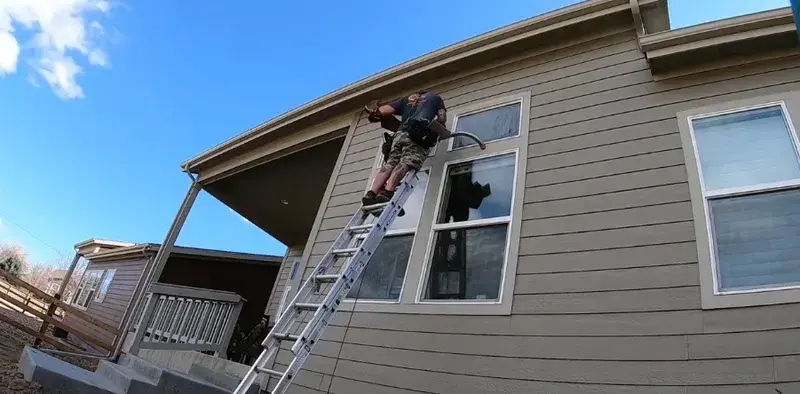
Window Cleaning for HOAs & Community Associations in San Clemente
Window cleaning for an HOA or community association in San Clemente starts with defining responsibility and scope.
Common area glass, clubhouse windows, entry doors, amenity buildings, and residential windows may not fall under the same maintenance responsibility. Once the association identifies what it is responsible for, window cleaning can be planned around the property, glass surfaces, access, current condition, community activity, and maintenance needs.
A useful planning sequence is:
The order matters. Before an HOA decides how often windows should be cleaned, it should first establish which windows the association is actually responsible for.
What Does HOA Window Cleaning Include?
There is no single scope that applies to every HOA.
Depending on the community and its maintenance responsibilities, an association authorized scope could include:
- Clubhouse windows
- Amenity building glass
- Community office glass
- Common entry doors
- Shared interior glass
- Common area exterior windows
- Other association controlled glass
Residential windows may or may not belong in that scope.
The same applies to screens, tracks, frames, and sills.
“HOA window cleaning” describes who is coordinating the service. The actual contract defines what gets cleaned.
Which Windows Is an HOA Responsible for Cleaning?
Responsibility depends on the association’s governing documents and the part of the property involved.
California Civil Code Section 4775 establishes default maintenance responsibilities for common interest developments, but the applicable declaration can allocate responsibilities differently. The association should confirm responsibility for the specific window or area from its current governing documents.
A community may contain several categories of glass.
Association Maintained Common Area Glass
This could include glass in association controlled common areas where those components fall within the association’s maintenance responsibility.
Exclusive Use or Limited Use Areas
Responsibility for components associated with patios, balconies, or other areas used by a particular residence should be checked against the association’s current documents.
Owner Maintained Residential Glass
Some windows may fall within an owner’s maintenance responsibility rather than the association’s cleaning scope.
Shared or Commercial Areas
Mixed use communities can introduce other property and maintenance relationships.
The board or community manager should confirm responsibility before defining the cleaning scope.
This page discusses cleaning planning, not legal interpretation of a particular association’s governing documents.
Are Exterior Windows Automatically the HOA’s Responsibility?
No.
“Exterior” describes where the glass is. It does not determine who is responsible for maintaining it.
Responsibility can differ among condominium associations, townhome communities, planned developments, single family HOA communities, and mixed use properties.
An HOA may also have appearance rules that apply to owner maintained property. That is different from the association paying to clean that property.
Community appearance requirements and association maintenance responsibility are related issues, but they are not the same issue.
What Is the Difference Between HOA Window Cleaning and Property Manager Window Cleaning?
The two can overlap, but the decision starts in a different place.
HOA window cleaning focuses on association responsibility, common areas, board or community decisions, residents, and association controlled property.
Property manager window cleaning applies more broadly to coordinating service across managed properties, owners, occupants, vendors, and different property types.
A community manager may coordinate an HOA project. The association structure still helps determine why the work is being performed and which property areas belong in the authorized scope.
Who Should Coordinate HOA Window Cleaning: the Board or Community Manager?
Either may be involved.
The right contact depends on how the association operates and who has authority to approve the work.
That person could be a board representative, community manager, management company representative, maintenance committee representative, or another authorized site contact.
The title matters less than the authority.
The contact should be able to approve the scope, provide necessary property information, address access questions, and review the completed work.
What Should an HOA Window Cleaning Scope Clearly Define?
A good scope should be understandable without guessing.
Property and Building Areas
Identify which buildings or areas are included, such as a clubhouse, community office, common stairwell, entry area, or amenity building.
Glass Surfaces
State whether the work covers exterior glass only or interior and exterior glass.
Doors and Entry Glass
Entry doors, sidelights, and other glass should be identified rather than assumed.
Screens and Tracks
State whether screen or track cleaning is included where applicable.
Frames and Sills
These should be identified separately if they are part of the requested work.
Common Area and Residential Glass
If both are involved, separate them clearly.
Access
Identify upper levels, gates, occupied areas, private areas, landscaping, parking, or other access considerations.
Access planning should also account for upper level and difficult to reach glass. The appropriate equipment and work method depend on the building, window configuration, height, surrounding area, and site conditions.
Existing Conditions
Persistent mineral deposits, construction residue, damaged screens, cloudy glass, and other visible conditions should not be silently treated as ordinary dirt.
A repeatable HOA service starts with a scope that another board member, manager, or cleaning team can understand without guessing.
Are Screens, Tracks and Frames Included in HOA Window Cleaning?
Not unless they are part of the agreed scope.
Glass, screens, tracks, frames, and sills can require different work.
Glass cleaning ≠ screen cleaning ≠ track cleaning ≠ frame detailing
A community with hundreds of screens presents a different project from exterior glass only. Tracks may also be inside occupied residences even when exterior glass can be reached from outside.
Manufacturer care instructions matter too. FGIA recommends keeping window tracks and drainage openings free of debris. Andersen provides separate care guidance for glass, screens, tracks, frames, and other window components.
Maintenance guidance for these components does not place them into every window cleaning contract. The scope should say what is included.
Should an HOA Clean Individual Homeowners’ Windows?
Only when those windows belong within the association’s authorized maintenance scope.
Some associations may maintain certain common property while individual owners maintain their own windows. Other governing documents may allocate responsibility differently.
An association can also establish appearance requirements for owner maintained areas without providing the cleaning itself.
Before residential windows are added to an association contract, confirm that they belong in the approved scope.
What About Condominium Window Cleaning?
Condominium properties make responsibility especially important because one structure can contain several types of property.
A building may have common stairwell glass, shared hallway windows, lobby glass, amenity glass, individual unit windows, and patio or balcony related glass.
Those areas should not be treated as one category simply because they share a building.
A condominium building can contain association controlled and owner controlled window areas in the same structure.
Confirm responsibility first. Then define which surfaces the cleaning contract covers.
What About Clubhouse and Amenity Building Windows?
Common buildings can have different maintenance needs from residential windows.
A clubhouse, association office, community room, or amenity building may contain exterior panes, meeting room glass, entry doors, or other frequently seen surfaces.
Entry glass may receive repeated hand contact. Other panes may mainly experience exterior weather, landscaping, irrigation, or coastal exposure.
Common area glass should be scheduled according to how the space is used and exposed, not simply because it belongs to an HOA.
Do HOA Entry Doors Need the Same Cleaning Frequency as Other Windows?
Not necessarily.
Entry doors can collect fingerprints from residents, visitors, staff, and vendors. Protected upper windows may receive little direct contact. Exterior glass has different exposure, while lower panes near irrigation may develop recurring spots.
These surfaces can belong to the same property while changing at different rates.
One HOA property can have several cleaning frequencies when the conditions justify them.
How Often Should an HOA Schedule Window Cleaning?
There is no universal HOA window cleaning schedule.
Frequency should follow the glass, property use, exposure, appearance expectations, and recurring sources of buildup.
Relevant factors include resident and visitor traffic, common area use, coastal exposure, irrigation, landscaping, window orientation, building protection, interior versus exterior glass, and previous maintenance history.
Manufacturer recommendations can also vary by product and environment. Andersen, for example, calls for more frequent care for some products in coastal environments with greater exposure to airborne dirt, dust, smoke, or salt spray.
That is product specific guidance, not a universal interval for every San Clemente association.
Frequency should follow actual need, not the HOA label.
Can Different HOA Buildings or Glass Areas Be on Different Cleaning Schedules?
Yes.
Clubhouse entry doors may receive frequent hand contact. Protected meeting room windows may change more slowly. Upper exterior glass can have different weather exposure. Lower glass reached by irrigation may develop recurring deposits.
Some residential windows may not belong to the association’s scope at all.
Consistency does not require every pane to be cleaned on the same day. A community can have one maintenance plan with clearly defined frequencies for different areas.
Should HOA Window Cleaning Be One Time or Recurring?
Either can make sense.
A one time service may fit overdue cleaning, community event preparation, transition between providers, a specific common area need, or work following construction.
Recurring service may fit entry glass, regularly used common areas, or other surfaces with a repeatable cleaning need.
Recurring service should follow a recurring need.
The scope must also be clear enough to repeat.
What Should Happen Before an HOA Starts Recurring Window Cleaning?
Establish the baseline.
The first service is a chance to separate routine contamination from conditions that recurring cleaning may not correct.
Look for ordinary dirt and film, mineral deposits, scratches, haze between panes, paint or construction residue, damaged screens, and access limitations.
This matters because a mark discovered during a later service may have existed before the maintenance schedule began.
Establish the baseline before establishing the schedule.
Future visits can then maintain what routine cleaning can actually change.
What Is the Difference Between HOA Maintenance Cleaning and Glass Restoration?
Routine maintenance cleaning addresses appropriate surface contamination such as ordinary dirt, dust, fingerprints, and film.
Other conditions require a different discussion.
Established mineral deposits, paint, adhesive, silicone, and construction residue can require specialty cleaning.
Scratches, etched glass, damaged coatings, and other physical changes are different again.
Fog or haze sealed between panes cannot be reached through routine surface cleaning.
A recurring HOA maintenance scope should not quietly become an unlimited restoration agreement.
Routine cleaning and specialty conditions should be separated in the scope where they exist.
How Should HOAs Handle Hard Water Spots on Common Area Windows?
Start with the affected glass and the water source.
Look at which panes are affected, the pattern of spotting, whether irrigation reaches the glass, and whether deposits remain after routine cleaning.
Water containing dissolved minerals can leave material behind when it repeatedly reaches glass and dries.
Established deposits may require a different approach from routine dirt.
Removing today’s mineral deposit and preventing tomorrow’s sprinkler exposure are two different maintenance tasks.
That distinction matters when landscaping and window cleaning are managed as separate services.
What If HOA Sprinklers Keep Hitting the Same Windows?
Cleaning can address appropriate contamination on the glass. It cannot redirect irrigation.
If sprinklers repeatedly reach the same pane, the water source should be considered separately from the cleaning schedule.
Increasing cleaning frequency may treat the symptom while the source continues.
Landscaping can therefore create both a glass condition and an access consideration around community buildings.
Are Hard Water Spots the Same as Glass Etching?
No.
Mineral deposits involve material deposited on the glass.
Etching describes a change to the glass surface.
Both can affect clarity, but they are not interchangeable. If a mark remains after appropriate cleaning, repeatedly increasing cleaning force is not a sound diagnosis.
What If HOA Windows Stay Cloudy After Cleaning?
A pane that remains cloudy needs more information.
Possible causes include mineral deposits, etching, a coating related appearance, fine scratches, specialty residue, or moisture between panes.
If accessible surfaces have been appropriately cleaned and the appearance remains unchanged, ordinary dirt may no longer explain the condition.
A pane that stays cloudy after appropriate cleaning needs diagnosis, not automatically a shorter maintenance interval.
What If the Haze Is Between the Panes?
If the accessible interior and exterior surfaces are clean but haze remains sealed inside an insulated glass unit, routine window cleaning cannot reach it.
Cleaning the exterior surface again will not remove a condition sealed between panes.
That condition belongs in a different maintenance discussion.
What If Scratches Are Found on HOA Glass?
First separate a true scratch from residue or other surface contamination.
A line noticed after cleaning was not necessarily created during cleaning. Removing dirt or film can make an existing physical condition easier to see.
A scratch becoming noticeable after cleaning does not by itself establish when or how it was created.
That distinction is useful when several parties are involved in maintaining a community property.
How Should Existing Window Conditions Be Documented?
For a larger association project, recording meaningful exceptions can help future maintenance decisions.
Where useful, note the affected building or area, persistent deposits, visible physical damage, access problems, or conditions outside the routine scope. Photos may also help where appropriate.
Documentation should stay factual.
A white mark does not prove a particular mineral. A scratch noticed after cleaning does not establish who caused it. Fog between panes is not exterior dirt.
The association and service provider should agree in advance on how relevant exceptions will be communicated.
The association does not need to turn every visit into an inspection report. The goal is to remember meaningful patterns.
How Should HOA Window Cleaning Be Coordinated Around Residents?
Resident impact should be considered before the service date.
Depending on the scope, planning may involve common area activity, interior access, private patios or balconies, gates, parking, walkways, amenity use, or restrictions supplied by the association.
Privacy can matter too. Exterior work around bedroom windows, patios, balconies, or other private areas may affect residents even when no interior access is needed.
The association should establish any required resident notice and preparation procedure rather than relying on a generic notice period.
Does Every Homeowner Need to Be Present?
No, not for every HOA window cleaning project.
Presence depends on how the included glass can be accessed.
Common area exterior glass may require no homeowner involvement. Interior residential glass, locked patios, screens accessible only from inside, or other unit specific conditions can create different requirements.
Those access needs should be identified before scheduling.
How Should Gated HOA Communities Plan Window Cleaning Access?
Confirm the actual community procedure before service.
The association or manager may need to identify the authorized site contact, vendor entry procedure, gated work areas, parking restrictions, and any residential access required by the scope.
Gate access should be confirmed for the actual property rather than assumed from the neighborhood or a previous project.
What Vendor Documents Might an HOA or Management Company Request?
Requirements vary by association and management company.
Some may have vendor onboarding requirements involving insurance documentation, tax forms, contract documents, or site procedures.
Those requirements should be confirmed directly with the association or manager before scheduling because they are not identical across communities.
This is also why a contractor should not assume that a document requested by one San Clemente association will be required by another.
Do San Clemente HOAs Have Special Window Cleaning Rules?
There is no single San Clemente HOA window cleaning rule that applies to every community.
Associations can have different governing documents, maintenance allocations, appearance standards, vendor procedures, and access rules. Those requirements can change.
Boards, managers, and homeowners should check their own current documents and procedures rather than relying on a generic San Clemente HOA rule.
This is especially important before relying on online claims that a particular community requires a fixed cleaning interval or cleaning method.
Can Window Cleaning Help With an HOA Maintenance Notice?
It can when the notice concerns a condition that appropriate window cleaning can change.
Start with the notice itself.
Determine what condition is identified, which window or component is involved, who is responsible for it, and whether the issue appears to be routine contamination or another condition.
A maintenance notice identifies a requirement or concern. It does not necessarily identify the correct cleaning method.
Window cleaning should not be presented as a guarantee that an association notice will be closed.
What If an HOA Notice Is About a Condition Cleaning Cannot Fix?
Identify the condition before authorizing more cleaning.
Ordinary surface dirt may be a routine cleaning issue.
Mineral deposits can require a specialty cleaning assessment.
Etched glass or physical damage may not be reversible through routine cleaning.
Fog between panes is not accessible surface contamination.
A damaged screen is a repair condition rather than dirty glass.
The next step should follow the condition identified on the window, not simply the fact that a notice was issued.
How Does San Clemente’s Coastal Environment Affect HOA Window Maintenance?
San Clemente’s Pacific coastal setting makes exposure relevant, but not uniform.
FGIA advises additional exterior window care in saltwater environments. Andersen also identifies salt spray among the materials that can collect on exterior window products.
That supports considering coastal exposure. It does not establish that every pane in every San Clemente HOA has salt buildup.
Orientation, wind, building protection, landscaping, irrigation, and distance from immediate ocean exposure can change what reaches individual glass surfaces.
Community location gives us context. Building orientation and individual pane exposure tell us more about what reaches the glass.
How Might HOA Window Needs Differ Across San Clemente?
The same maintenance plan can encounter different conditions across San Clemente.
North Beach and the Pier Bowl
Properties closer to the coast can make ocean facing exposure and marine conditions more relevant. Individual panes still need to be evaluated by their actual condition.
Talega and Forster Ranch
Landscaping, irrigation, vegetation, building orientation, two story access, and common amenities can influence the work. A lower pane reached by sprinklers may differ from protected glass elsewhere in the community.
Rancho San Clemente
Hillside properties can introduce slope, elevation, wind exposure, orientation, and access considerations.
Marblehead
View glass, orientation, irrigation, and differences between exposed and protected elevations may matter.
Neighborhood provides context. Responsibility, building layout, exposure, and glass condition determine the maintenance need.
Should an HOA Schedule Spring Window Cleaning?
Spring can be a useful maintenance checkpoint if it fits the community.
Current glass condition, community events, winter buildup, or planned exterior work can all affect timing.
There is no universal HOA spring cleaning requirement.
Use the season as a planning opportunity when useful rather than turning it into an automatic contract frequency.
Should HOA Windows Be Cleaned Before or After House Washing?
Where exterior house washing is planned, final window cleaning usually belongs after the washing work.
A useful sequence is:
Exterior washing can put water, loosened material, or cleaning residue onto nearby glass.
Do not finish the glass before another exterior process that may affect it.
Should HOA Windows Be Cleaned Before or After Exterior Painting?
Final window cleaning usually makes more sense after exterior painting and related touch ups are complete.
A useful sequence is:
This reduces the chance of treating the glass as finished before work that can put dust, paint, masking residue, or other material back onto it.
How Should an HOA Handle Post Construction Window Cleaning?
Post construction work should be treated separately from ordinary recurring maintenance when the conditions require it.
A clubhouse renovation, exterior project, remodel, or other community improvement can leave construction dust, paint, adhesive, silicone, or other project residue.
The cleaning method should follow the material and glass surface.
A newly completed HOA project may need an initial cleaning scope before the glass moves into routine maintenance.
What Information Helps an HOA Get a Clear Window Cleaning Quote?
A useful quote starts with a defined property and scope.
Helpful information includes:
- Community or property name
- Service address
- Authorized contact
- Buildings or areas involved
- Common area versus residential scope
- Exterior versus interior glass
- Entry and door glass
- Screens or tracks if applicable
- Number of stories and access considerations
- Visible persistent deposits
- Construction or paint residue
- Gate or access requirements
- One time or recurring need
- Scheduling restrictions supplied by the association
- Photos where useful
A price based only on the number of homes may tell a contractor very little about the actual work.
How Is HOA Window Cleaning Priced?
“HOA” is not a pricing unit.
The quote can depend on the amount and configuration of glass, number and layout of buildings, interior or exterior scope, access, screens and tracks, current condition, and specialty contamination.
Two contractors can also appear to have very different prices when they are quoting different work.
An exterior glass only quote should not be compared directly with one that includes interiors, screens, tracks, or specialty deposit treatment.
A lower total is not necessarily a lower price for the same work when the scopes are different.
Can an HOA Use One Window Cleaning Plan for the Entire Community?
Yes, as an overall management plan.
That plan can distinguish among common buildings, high touch entries, protected glass, exterior elevations, irrigation facing windows, residential windows where authorized, and specialty conditions.
The goal is coordinated maintenance, not identical treatment for every pane.
What Should an HOA Track Between Window Cleaning Visits?
Simple records can make future decisions easier.
Useful information may include the service date, building or area, cleaning scope, access problems, recurring mineral deposit locations, persistent glass conditions, screen concerns, exterior work completed since the previous visit, and changes in irrigation exposure.
The association does not need to turn every visit into an inspection report. The goal is to remember meaningful patterns.
Patterns can help the board or manager decide whether the existing scope and frequency still make sense.
What Should an HOA Board or Community Manager Ask a Window Cleaning Company?
Before comparing bids, ask questions that make the scopes comparable:
- What glass and property areas are included?
- What is excluded?
- How are common and residential areas separated?
- What access is required?
- Are screens, tracks, frames, or sills included?
- How are existing mineral deposits handled?
- Is specialty residue separate from routine cleaning?
- How is recurring frequency determined?
- What happens if the authorized scope changes?
- How are existing glass conditions communicated?
- What happens when a pane remains cloudy after routine cleaning?
- How is completion of the agreed scope reviewed?
The association should also confirm its own vendor requirements before awarding work.
How We Approach HOA and Community Association Window Cleaning in San Clemente
We start by defining what the association is asking us to clean.
Our process is to:
- Identify the authorized contact.
- Confirm the requested scope before beginning so the authorized contact and cleaning team are working from the same understanding of what is included.
- Clarify which property areas are in scope.
- Separate common area and residential glass where relevant.
- Confirm exterior and interior scope.
- Review known access requirements.
- Assess current glass condition.
- Separate routine contamination from specialty conditions.
- Match the cleaning method to the glass, condition, and access.
- Protect surrounding property as required by the site.
- When included and appropriate, remove screens, clean them, allow them to dry or drain as appropriate, and reinstall them.
- Reassess persistent marks.
- Explain visible conditions routine cleaning may not change.
- Review the completed scope with the authorized contact where applicable.
- Discuss future cleaning according to actual property exposure and need.
We start by defining what the association is asking us to maintain. Then the condition of the glass tells us what cleaning is actually needed.
We do not assign every community the same schedule or treat every persistent mark as ordinary dirt.
HOA Window Cleaning Planning Checklist
Responsibility
- Confirm what the association maintains.
- Separate common areas from owner controlled areas.
- Identify who can authorize the work.
Scope
- List the buildings and areas.
- Confirm exterior versus interior glass.
- Identify entry and door glass.
- Decide whether screens and tracks are included.
- Note difficult access.
Condition
- Note ordinary buildup.
- Identify sprinkler facing spots.
- Note cloudy panes.
- Record obvious scratches or damage.
- Identify construction or paint residue.
Access
- Confirm gate and access procedures.
- Identify occupied or private areas affected by the work.
- Confirm scheduling restrictions supplied by the association.
Maintenance
- Establish the initial condition.
- Complete the authorized cleaning.
- Reassess what remains.
- Identify recurring exposure.
- Set future frequency from actual need.
- Update the scope when the property changes.
Window Cleaning for HOAs and Community Associations in San Clemente FAQs
What Does HOA Window Cleaning Include?
It includes the glass and related components specifically authorized in the association’s scope. Depending on the property, that could involve common area glass, clubhouse windows, entry doors, amenity buildings, or other association maintained surfaces. Screens and tracks should be stated separately.
Is an HOA Responsible for Exterior Window Cleaning?
Not automatically. Responsibility depends on the association’s governing documents and how the property is classified. Exterior location alone does not establish association responsibility.
Can an HOA Clean Individual Homeowners’ Windows?
It can when those windows fall within the association’s authorized maintenance scope. The governing documents and association decision should be checked rather than assuming all residential windows are included.
Are Screens and Tracks Included in HOA Window Cleaning?
Only when the scope includes them. Glass, screens, tracks, frames, and sills are separate parts of the work and should be identified in the quote.
How Often Should an HOA Schedule Window Cleaning?
There is no universal interval. Frequency should follow property use, exposure, glass condition, appearance needs, irrigation, coastal conditions, and the type of glass involved.
Can Different HOA Buildings Have Different Cleaning Schedules?
Yes. Entry glass, protected windows, upper exterior glass, irrigation facing panes, and other areas can change at different rates.
Can HOA Sprinklers Cause Hard Water Spots?
Water containing dissolved minerals can leave deposits when it repeatedly reaches glass and dries. If sprinklers continue reaching the same windows, the water source and the glass condition should be addressed separately.
What If HOA Windows Stay Cloudy After Cleaning?
Persistent haze may involve mineral deposits, etching, scratches, a coating related appearance, specialty residue, or moisture between panes. The remaining condition should be identified before stronger cleaning is attempted.
Should HOA Windows Be Cleaned After House Washing or Exterior Painting?
Final window cleaning generally belongs after exterior work that can put water, dust, paint, or residue back onto the glass.
Can HOA Window Cleaning Be Scheduled as Recurring Maintenance?
Yes, when the property has a recurring cleaning need and the scope is clear enough to repeat. Establishing the initial condition first gives future maintenance a useful baseline.
Planning Window Cleaning for a San Clemente HOA or Community Association?
If your board or community manager is planning window cleaning in San Clemente, start by identifying which glass the association is responsible for and what the authorized scope includes.
We can discuss common area or other authorized property glass, access, current condition, one time or recurring needs, and visible conditions that may fall outside routine cleaning.
References
- California Civil Code Section 4775: Default maintenance responsibilities for common interest developments, subject to the applicable declaration and property classification.
- California Department of Real Estate: 2026 Real Estate Law, Pertinent Excerpts from the California Codes. Includes provisions of the Davis Stirling Common Interest Development Act relevant to association and owner maintenance responsibilities.
- Fenestration and Glazing Industry Alliance: Caring for Your Windows, Doors & Skylights. Industry guidance covering glass, screens, tracks, drainage openings, saltwater environments, and cleaning precautions.
- Andersen Windows & Doors: Care & Maintenance. Manufacturer guidance covering glass, frames, insect screens, tracks, environmental exposure, and cleaning precautions.
- Andersen Windows & Doors: Important Product, Care and Maintenance Information. Product guidance addressing environmental buildup, drainage systems, screens, cleaning materials, and pressurized cleaning tools.