
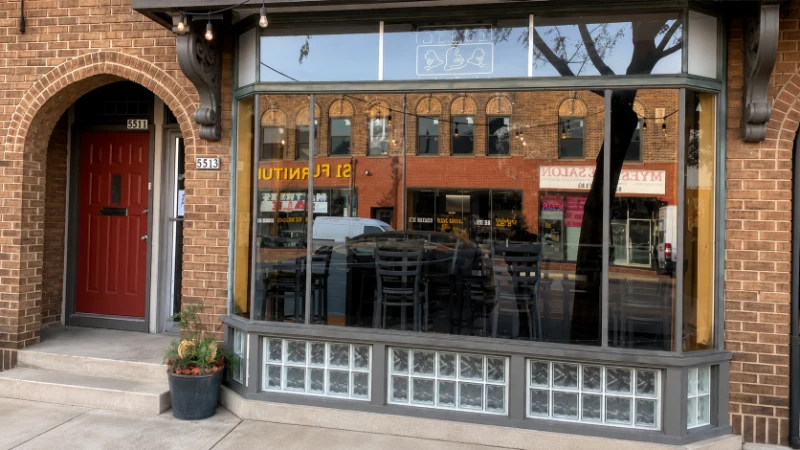
Window Cleaning for Restaurants in San Clemente: Customer Facing Glass Without Disrupting Service
Restaurant window cleaning in San Clemente can include storefront windows, entrance doors, sidelights, and agreed interior glass around dining or customer facing areas.
Those surfaces do not always need the same attention. An entrance door may show fingerprints long before a protected dining room window looks dirty. The exterior side of a window can also have a completely different condition from the interior side.
A useful way to plan the work is:
A restaurant does not have one type of glass or one type of buildup. The location, use, exposure, and condition of each glass surface help determine what needs cleaning and how often it needs attention.
What Does Restaurant Window Cleaning Include?
The exact scope depends on the restaurant and the agreed service.
It may include:
- Exterior storefront windows
- Entrance door glass
- Sidelights
- Customer facing windows
- Accessible interior window glass
- Dining area glass where included
- Interior architectural glass where agreed
- Other specified commercial window glass
Screens, tracks, frames, sills, mirrors, display cases, equipment glass, kitchen surfaces, decals, pressure washing, and specialty restoration should not be assumed to be included.
“Restaurant window cleaning” identifies the property type. The quote should still identify the glass being cleaned.
That matters because customers may see several types of glass from the same table even though those surfaces belong to different cleaning scopes.
How Is Restaurant Window Cleaning Different From Regular Storefront Window Cleaning?
Restaurants and other storefront businesses share some of the same glass conditions. Both can have street facing windows, entrance doors, customer traffic, fingerprints, and outdoor exposure.
Restaurant operations add another layer.
Cleaning may need to fit around dining periods, opening preparation, guest arrival, seating near windows, patio activity, staff movement, deliveries, and food service near some glass surfaces.
The difference is not that every restaurant window is dirtier. Restaurant operations create a different scheduling and glass use context.
That is why restaurant window cleaning should be planned around both the condition of the glass and how the restaurant uses the surrounding space.
Restaurant Glass Gets Dirty Differently Depending on Where It Is
A restaurant can contain several glass environments within a small area.
The front door, fixed storefront glass, dining room windows, and interior glass may all change at different rates.
Entry Doors and Sidelights
Entrance doors receive repeated contact from customers, staff, delivery workers, and other visitors.
Fingerprints and handprints can therefore appear much sooner than on nearby fixed panes.
Sidelights may receive less direct contact, but their position beside the entrance can make marks highly visible.
Two pieces of glass a few feet apart can have completely different maintenance needs.
The entrance may need a touch up before the rest of the storefront needs another full cleaning.
Customer Facing and Dining Area Glass
Dining area windows may be highly visible even when they are rarely touched.
Their condition depends on where the glass is located, how close customers sit to it, what reaches each side, and whether the pane is protected or exposed.
A large fixed pane beside a dining table may therefore have a different maintenance need from an entry door at the same restaurant.
Interior Film and Fingerprints
Several types of material can affect interior glass.
Depending on the location, visible film may involve fingerprints, ordinary indoor dust, cleaning product residue, hand contact, or other material related to how the area is used.
Cooking related film may be relevant in some locations, but it should not be assumed on every dining room or storefront window.
Identify what is on the glass before calling every restaurant film grease.
A restaurant address does not diagnose the material on a pane.
Exterior Storefront Glass
Exterior glass can collect ordinary outdoor dirt and material related to street exposure, weather, irrigation, coastal conditions, landscaping, and building orientation.
The exterior and interior sides of the same window may therefore need attention for completely different reasons.
Same restaurant. Different glass. Different exposure. Different maintenance need.
Why Can Restaurant Windows Look Streaky After Staff Clean Them?
A quick touch up and full pane cleaning are different tasks.
Remaining marks can result from partial spot cleaning, residue on a cloth or tool, cleaning solution left on the surface, or contamination being moved rather than removed.
Lighting can also make marks easier to see from one angle than another. Persistent deposits or other glass conditions may be mistaken for streaks.
Staff touch ups and full glass cleaning serve different purposes.
Removing a fresh fingerprint from an entrance door can make sense during the day. That does not necessarily clean the entire pane from edge to edge.
Restaurant staff can reasonably address fresh fingerprints and small smudges between scheduled services where appropriate.
Recurring professional cleaning does not mean a visible handprint has to remain until the next service date. Daily touch ups also do not replace full window cleaning when the entire glass surface needs attention.
Should Restaurant Windows Be Cleaned Before Opening or After Closing?
There is no single time that works for every restaurant.
The best service time allows the agreed glass to be accessed without unnecessary interference with guests, staff, entrances, or normal restaurant operations.
Depending on the business, a workable period might occur before opening, between busy periods, or at another agreed time.
A breakfast focused restaurant and a dinner focused restaurant can have very different operating patterns.
Scheduling should follow the actual restaurant’s operating rhythm, not a generic assumption that every restaurant is quiet at the same time.
The restaurant and window cleaning company should agree on a workable service window.
Can Restaurant Window Cleaning Be Done While the Restaurant Is Open?
Sometimes.
The answer depends on the glass, access, customer traffic, and site conditions.
Questions to consider include:
- Are guests seated beside the glass?
- Is the entrance in constant use?
- Does the work require equipment in a traffic path?
- Is interior access required?
- Is outdoor dining active beside the glass?
- Can the work area be controlled safely?
For the window cleaning operation, safe access has to be considered along with restaurant traffic and the work area. California window cleaning regulations address safe working conditions and equipment use, including ladder placement around doors.
An active restaurant entrance is therefore more than another piece of glass. It is also a traffic route.
An open restaurant is not necessarily inaccessible, but customer flow and safe access both need to be considered.
How Can Window Cleaning Avoid Disrupting Restaurant Guests?
Start with the path people use.
Look at entrances, waiting areas, occupied tables, patios, host stations, staff routes, deliveries, and busy service periods.
For interior work, the route to the pane can matter as much as the pane itself.
A window may be easy to reach when the restaurant is empty but difficult to service once tables are occupied and staff are moving through the room.
The best service window is partly a glass decision and partly a traffic decision.
Planning around actual restaurant activity is more useful than promising that window cleaning will create no disruption at all.
What About Tables or Seating Next to the Windows?
Interior dining room glass can sit directly beside tables.
Before cleaning those areas, identify whether seating is occupied, how the glass can be reached, and whether surrounding property needs protection.
Furniture should not simply be assumed to be movable.
If cleaning a pane requires working over diners, reaching across a set table, or putting equipment into an active service path, the timing should be reconsidered.
If access conflicts with an occupied dining area, solve the timing problem before the cleaning problem.
What About Cleaning Products Around Active Dining Areas?
Interior window cleaning should account for the surrounding restaurant environment.
Tables, beverages, food, utensils, floors, customers, and staff may be near the work area. The California Retail Food Code separately addresses protection of food, equipment, utensils, and other food service items from contamination.
Window cleaning should not be presented as food sanitation or as a way to improve a health inspection score.
For the cleaning work itself, the practical point is simple:
In an occupied dining area, controlling where cleaning solution and water go matters as much as cleaning the glass.
What About Patio Doors and Outdoor Dining Glass?
Outdoor dining can place guests close to exterior glass.
Depending on the restaurant and scope, relevant surfaces may include patio doors, windows beside outdoor seating, entrance or exit glass, and other specified architectural glass.
These surfaces can experience customer contact on one side and outdoor exposure on the other.
Patio glass can sit at the intersection of dining activity and exterior exposure.
This is relevant in San Clemente, where outdoor dining is part of the current downtown restaurant environment. The City of San Clemente’s Temporary Parklet Dining Program currently extends through January 1, 2029 and includes a limited number of parklets on Avenida Del Mar and other public property.
That local setting can affect access and customer traffic. It does not determine how often a particular restaurant’s windows need cleaning.
Are Restaurant Windows More Difficult to Clean Near the Coast?
Not simply because the restaurant is in San Clemente.
Coastal exposure can be relevant. Wind, airborne material, marine conditions, building orientation, irrigation, and proximity to the Pacific can affect exterior surfaces differently.
A coastal address does not identify what is on a particular pane.
The pane’s orientation and exposure tell us more than the restaurant’s ZIP code.
A protected window can behave differently from ocean facing glass on the same property.
The material on the pane should still be identified before choosing the cleaning method.
How Can Restaurant Location Affect Window Cleaning in San Clemente?
Location can change the operating and exposure context without determining the cleaning schedule.
Downtown and Avenida Del Mar
Avenida Del Mar combines restaurants, pedestrian activity, storefront entrances, and outdoor dining. For window cleaning, that can make entrance traffic, sidewalk access, patio seating, deliveries, and timing more relevant.
Pier Bowl and North Beach
Restaurants closer to the coast may have more reason to consider wind, marine exposure, visitor activity, and ocean facing glass. Individual panes can still have very different conditions depending on orientation and protection.
El Camino Real and Avenida Pico
Commercial corridor properties can introduce different combinations of street facing glass, parking, landscaping, irrigation, shopping center access, and customer entrances.
Location provides context. The individual restaurant, glass exposure, and operating pattern determine the service need.
A cleaning schedule used by one San Clemente restaurant should not automatically be assigned to another restaurant simply because both are nearby.
Can Restaurant Landscaping or Sprinklers Cause Window Spots?
Yes, when irrigation reaches the glass.
The basic relationship is:
Repeated exposure can create a recurring condition.
White or pale marks should still be identified rather than automatically labeled as hard water. Appearance alone does not establish the cause.
Light surface material may respond differently from established mineral buildup. Once a mineral condition is established, it can become a different service question from ordinary commercial maintenance.
Cleaning the glass and correcting repeated sprinkler exposure are separate maintenance tasks.
If irrigation continues reaching the same pane, shortening the routine window cleaning interval may address the symptom without changing the source.
What If Cleaning Does Not Remove a Mark on Restaurant Glass?
Not every visible condition is ordinary dirt.
If appropriate cleaning stops changing a mark, possible explanations can include established mineral deposits, persistent specialty residue, etching, scratches, coating related appearance, or moisture between panes.
A true scratch cannot be washed away. Haze sealed inside an insulated glass unit cannot be reached through routine surface cleaning.
If appropriate cleaning stops changing the mark, identify the condition before increasing cleaning frequency or cleaning force.
That keeps routine restaurant maintenance separate from glass conditions that require another type of assessment.
How Should Restaurant Window Decals, Vinyl and Other Glass Surfaces Be Handled?
Restaurant glass often carries information as well as providing a view.
Business hours, delivery service stickers, promotional graphics, required notices, branding vinyl, and temporary signage may be attached to the glass.
Those materials should not be treated as debris simply because they are on a window.
Glass graphics are part of the existing surface condition and scope. They should not be removed automatically.
Decal or adhesive removal should be treated separately when requested.
Mirrors, menu cases, display cases, equipment doors, and kitchen glass should also not be assumed to be part of ordinary restaurant window cleaning merely because they are transparent or reflective.
A restaurant contains many glass surfaces. Window cleaning does not automatically mean every glass object inside the business.
How Often Should Restaurant Windows Be Cleaned?
There is no universal restaurant interval.
Frequency can depend on:
- Entry door contact
- Customer traffic
- Street exposure
- Interior use
- Coastal exposure
- Irrigation
- The restaurant’s appearance needs
- Staff touch ups
- Current buildup
- Operating pattern
Different glass areas within the same restaurant can change at different rates.
An entry door may show fingerprints quickly. A protected fixed pane may change more slowly. A sprinkler facing exterior window may develop recurring spots unrelated to customer contact.
Restaurant frequency should be earned by the glass, not assigned by the business category.
The useful question is not simply, “How often should a restaurant clean its windows?”
It is:
Which glass is changing fastest, why is it changing, and when does that condition justify another cleaning?
Should Restaurants Use One Time or Recurring Window Cleaning?
Either can make sense.
One time service may fit overdue cleaning, an opening or reopening, an event, a transition, or a specific glass condition.
Recurring service may make sense where fingerprints, ordinary exterior buildup, or another cleanable condition returns predictably.
Before recurring service begins, establish the starting condition. Existing mineral deposits, scratches, between pane haze, adhesive, paint, construction residue, unusual coatings, or access limitations should not silently become part of routine maintenance expectations.
Establish the glass condition before establishing the maintenance schedule.
Recurring service can then maintain what appropriate routine cleaning can actually change.
How Should Window Cleaning Fit Around Restaurant Deliveries, Prep and Service?
Cleaning should be planned around more than customers.
Restaurant entrances and work areas may also be used for food and beverage deliveries, opening preparation, patio setup, table setup, staff movement, waste or linen service, and other maintenance work.
A proposed cleaning time can look quiet from the dining room while still conflicting with activity at the entrance or service area.
A technically clean window is not a successful restaurant service if the cleaning process unnecessarily interferes with restaurant operations.
The restaurant contact should identify known operational conflicts before the service time is set.
What If Painting, Building Washing or Remodeling Is Planned?
Sequence the work so the windows are not treated as finished before another project can affect them.
Building washing may put water or loosened material onto nearby glass. Painting can introduce dust, masking material, paint, or other residue. Remodeling or construction can leave dust, adhesive, silicone, protective film, or other project material.
A useful sequence is:
Specialty residue should be identified before removal. Post construction conditions should not silently become part of routine restaurant window maintenance.
For an opening or reopening, work backward from the opening date while keeping final glass cleaning after the work most likely to dirty the windows.
How Much Does Restaurant Window Cleaning Cost in San Clemente?
There is no useful restaurant wide price.
The quote can depend on:
- Number and size of panes
- Entry doors
- Interior and exterior scope
- Interior architectural glass where included
- Access
- Current condition
- One time or recurring scope
- Specialty deposits or residue
Two restaurants with the same number of seats can have completely different glass layouts.
An exterior storefront only quote is also not directly comparable with a quote that includes interior dining glass, entry doors, or specialty conditions.
“Restaurant” is not the price. The amount of glass, access, condition, and agreed scope determine the quote.
What Information Helps Us Quote Restaurant Window Cleaning?
Useful information includes:
- Restaurant and service address
- Authorized contact
- Approximate glass areas
- Exterior only or interior and exterior scope
- Entrance doors and sidelights
- Interior glass requested
- Current condition
- Visible persistent spots
- Decals or signage
- Access considerations
- Preferred operating window
- One time or recurring need
- Photos where useful
It also helps to mention upcoming painting, remodeling, building washing, or other work that could affect the glass.
A clear scope makes the quote easier to compare and the service easier to plan.
How We Approach Restaurant Window Cleaning in San Clemente
We start with the glass, restaurant layout, and requested scope.
Our process is to:
- Confirm the glass and agreed scope.
- Review access, customer traffic, and known operating constraints.
- Assess the current glass condition.
- Separate ordinary contamination from persistent or specialty conditions.
- Match the cleaning method to the glass, condition, and access.
- Clean the agreed glass while protecting surrounding property as required by the site.
- Reassess persistent marks and explain conditions routine cleaning may not change.
- Discuss future service according to actual use and exposure where recurring maintenance is needed.
We start with where the glass is, how it is used, and what is actually on it. Then we determine the appropriate cleaning scope.
That connects the cleaning method to the restaurant instead of assigning every restaurant the same process or schedule.
Restaurant Window Cleaning Checklist for Owners and Managers
Scope
- Identify exterior storefront glass.
- Identify entry doors and sidelights.
- Decide whether interior window glass is included.
- Identify dining area architectural glass.
- Separate mirrors, display cases, and equipment glass.
- Note decals and signage.
Condition
- Check fingerprints and ordinary film.
- Look for exterior dirt.
- Identify sprinkler facing spots.
- Note persistent haze.
- Note visible scratches.
- Identify paint, adhesive, or construction residue.
Operations
- Identify the busiest periods.
- Consider deliveries.
- Consider patio and table setup.
- Confirm access around occupied areas.
- Choose an appropriate service window.
Maintenance
- Establish the baseline condition.
- Complete the agreed cleaning.
- Reassess what remains.
- Determine which glass changes fastest.
- Use staff touch ups where appropriate.
- Set professional cleaning frequency from actual need.
- Review the frequency if restaurant operations or exposure changes.
The decision path is:
Window Cleaning for Restaurants in San Clemente FAQs
What Does Restaurant Window Cleaning Include?
It can include exterior storefront windows, entrance doors, sidelights, accessible interior windows, and other agreed customer facing architectural glass. Screens, tracks, mirrors, display cases, kitchen surfaces, equipment glass, and specialty restoration should be identified separately.
How Is Restaurant Window Cleaning Different From Storefront Cleaning?
Restaurant glass can involve dining periods, seating near windows, frequent entrance use, interior customer facing surfaces, patio activity, deliveries, and other operating constraints. The main difference is the restaurant’s use and scheduling context.
How Often Should Restaurant Windows Be Professionally Cleaned?
There is no universal interval. Frequency should follow customer contact, exterior exposure, glass location, irrigation, staff touch ups, current buildup, and the restaurant’s presentation needs.
Does Restaurant Glass Get Greasy?
Some glass can develop oily or cooking related film when its location and exposure make that relevant. Every restaurant pane should not be assumed to have grease simply because it is inside or near a restaurant.
Can Staff Clean Fingerprints Between Professional Visits?
Yes, where appropriate. Staff touch ups can address fresh fingerprints and small smudges. Full window cleaning addresses the agreed glass surface as a whole.
Can Restaurant Windows Be Cleaned While the Restaurant Is Open?
Sometimes. It depends on glass location, customer traffic, seating, entrance use, required equipment, access, and site conditions. Safe access and restaurant operations should both be considered.
Can Restaurant Sprinklers Cause Hard Water Spots?
Yes. Mineral containing irrigation water can leave deposits when it repeatedly reaches glass and dries. Cleaning the resulting deposit and correcting recurring water exposure are separate maintenance questions.
Why Are Restaurant Windows Still Cloudy After Cleaning?
Persistent haze can involve remaining film, mineral deposits, etching, scratches, coating appearance, specialty residue, or moisture between panes. The remaining condition should be identified before increasing cleaning frequency or using a more aggressive method.
Need Restaurant Window Cleaning in San Clemente?
If your restaurant’s storefront, entrance doors, or customer facing windows are showing fingerprints, exterior buildup, spots, or haze, start with the glass and how it is actually used.
We can discuss the requested interior or exterior scope, operating access, one time or recurring needs, and visible conditions that may fall outside routine window cleaning.
References
- California Department of Industrial Relations, Division of Occupational Safety and Health: California Code of Regulations, Title 8, Section 3282, General Requirements for All Window Cleaning Operations. Covers safety requirements applying to window cleaning operations.
- California Department of Industrial Relations, Division of Occupational Safety and Health: California Code of Regulations, Title 8, Section 3287, Ladders. Includes requirements applying to ladder use for window cleaning, including placement around doors.
- City of San Clemente: Temporary Parklet Dining Program. The current program extends through January 1, 2029 and addresses parklets on Avenida Del Mar and other public property.
- California Department of Public Health: California Retail Food Code. State requirements addressing food protection and food facility operations. Restaurant window cleaning should not be confused with food facility sanitation.